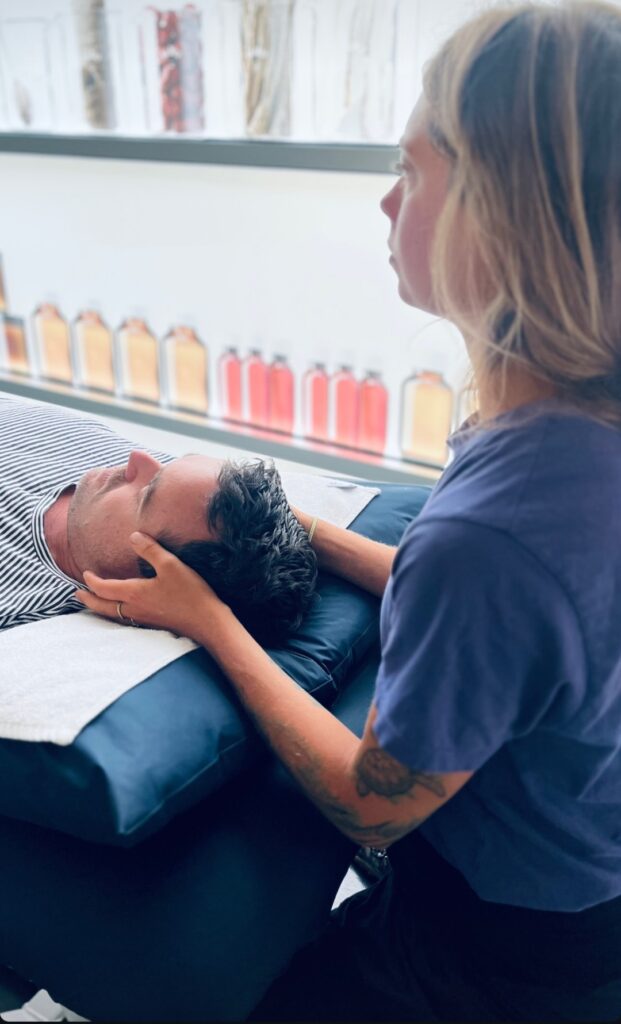
Craniosacral therapy (CST) is a relaxing, gentle, subtle form of manual therapy that releases soft tissue and joint restrictions in the craniosacral system: The cranial bones and sutures, the spine, sacrum, coccyx, and the membrane system that houses the nervous system. The craniosacral system is linked with the circulation of the cerebral-spinal fluid, which is crucial for the health of our brain nervous system, and receiving CST aims to improve fluid flow, keeping the brain healthy and functioning at its cognitively, and emotionally.
By addressing restrictions in the craniosacral system, CST has a profound effect on helping with autonomic regulation (homeostasis), and many chronic symptoms that might be related to heightened sympathetic nervous system hyper-arousal, such as:
- Chronic fatigue and burnout
- Prolonged stress
- Chronic illness and autoimmune disorders
- Anxiety, depression, and mood disorders
- Brain fog
- ADHD
- Chronic joint and muscle pain
- PMS symptoms
- Migraines and headaches
- IBS, and other digestive complaints
- Back and neck pain
- TMJ pain or tooth grinding
CST is a fantastic modality if you have back and neck pain or chronic stiffness and headaches. If you have ever had whiplash, concussion, head injuries (no matter how minor), a fall on your tailbone, a surgeries, or any other accidents and ailments affecting the skull, spine, or sacrum, including giving birth, craniosacral therapy can help.
Somatoemotional release (SER) is a component of CST, which works with potential emotional elements linked with physical restrictions in the body. This might look like a conversation as we work together on the table, or it might happen non-verbally.
Upledger Craniosacral Study Groups
If you are an Upledger Institute CST student, I run a study group every month or two to support our ongoing learning of this brilliant modality. Please get in touch if you would like to attend an upcoming study group.