Stuff I Wrote

On Physical Mastery #3: The Exercises Don’t Matter

The following is an expanded version of me talking shit a little meditation/reflection from one of the Zoom movement sessions I’ve been running for my clients and fellow movement explorers in this time of lockdown. I wonder if any of it will resonate for you? (~4 min read)

Let’s reflect on this today before we start moving:

You’ve shown up to this session because you must believe that there is something more your body can be for you, for you to live your life through, and there must be something more that you can be in this body you have.

Otherwise you wouldn’t have shown up, would you? 

This is on of the first important insights to have, if we are on a journey of physical mastery. Which is the journey I am on. And I hope you are, too.

The first question is: What is this “more” for you and your body? And is that “more” an external result or image? Or is it an internal state?

Because if it is an internal state you’re after, then the exercises we do today don’t have much inherent meaning. Truly, it doesn’t matter if you’re doing Cross-Fit or Tai Chi, or COVID-19 Move with Monika sessions,  if you can hold yourself in such a way that your body is already everything it needs to be, and you are simply showing up to celebrate it.  

But if its an external state you’re striving for- getting out of pain, getting stronger, losing fat, more mobility- then the exercises, specific protocols, and metrics you follow must be very, very important, because these ideologies become a part of the greater image your are trying to secure for yourself, along with the physical goals.

When you strive for a result it becomes this whole “thing” that is no longer about you, but for seeking something outside yourself to reinforce the “I” you call yourself, currently. In this goal-striving state, there can be no transformation, just reinforcing what is already there. 

And then, as a safe-guard, if you don’t indeed get the goal, now you have something to blame: The exercises, the coach, the protocol. Its got nothing to do with you or any failure to execute. And the majority of us would rather live this way.  

But this is not the path of physical mastery that I’m hoping to point you towards. 

Do you follow what I’m saying? 

What I’m saying is how you hold yourself through this session, any movement session, is so much more important than the actual exercises we do. 

You need to exist as the internal state in which you already have every capacity to attain whatever external goal. Only then, when you are doing this for you, by you, not by anyone else’ standard, paradoxically, can you attain any goal with a degree of sustainability and ease.

The important thing is not the exercises, but what you bring to them. The YOU you bring to them. Your awareness. Your curiosity. Your self-respect. Your desire to transform.

I personally don’t place too much meaning on the exercises I teach. They are just tools for the journey. They’re not magical, but you can work your own magic through them.

 Putting the transformative power on an exercise takes that power away from you.

So let’s reflect:

What is it about yourself you want to feel different after we’re done? Who is that?

And know that if you have even caught the tiniest glimpse of who that is, it is because that part of you already exists, and is waiting to participate in today’s movement session. 

The internal state I’m talking about  is the deliberate connection to the YOU who is already enough, and who doesn’t need exercise either to prove it, or to make up for any shortcomings. Only in this internal state can you see how this any movement session can be a celebration of you and your body, not a penance. Not a thing to “make up for” this or that. 

So I’ll ask again… What is this “more” that you know you can have for you and your body? Is it an image you cling to? Or is it a state you can hold?

Does movement help you find that state? Or can you hold it even before you being to move? 

What is the part of you that is already enough, and can you let that part of you come forward in celebration today, as you move? 

Just some humble thoughts from your friendly neighbourhood body mechanics detective.

On Physical Mastery #2: What’s the f*&#!%g point?

The following is an expanded version of a little talk- a “meditation”- I gave to my students this week at the beginning of one of my virtual movement sessions, via the now ubiquitous Zoom.

Most of my life, my movement practice has been a spectator sport.

Gymnastics, dance, powerlifting, climbing, and even the most mundane work outs at the gym…. If I’m being honest, I probably wouldn’t have done any of it without an audience. It all lacked intrinsic importance without witnesses to make it real.

Indeed, in many areas of life, it is doubtful that I’ll do the thing unless there’s someone else there to compare myself to in regards to how well I’m doing it.

The question of our time: If you do a workout and don’t post it on social media, did it even happen?

Because without spectators how would I know if I was good enough? How can I be the best at something with no one to judge me?

And now, with all the time and space of self-isolation, free from mirrors, free from spectators, free from the usual “out there” pressures to look and dress a certain way, I’ve been reflecting on what role movement truly plays in my life.

What does a movement practice look like with no bystanders as a reference to its existence? In other words…

If no ones watching what’s the point?

Well, I’m still moving, so I must have found a point, even if its just to self-indulgently write about it, here.

So I’ve found myself contemplating more deeply on what goals I actually have for my movement practice. Now that there is no excuse but for it to be a purely nourishing act for me, and not about using it to fit myself into the status quo, or seek recognition, or compete… What the heck am I doing?

Instead of asking, what are my fitness goals? I’m asking, what deeper goals do I have for me that movement can serve as a tool for on that journey?

What might I be using movement to escape from, living in isolation?

As I wrote about in my On Physical Mastery #1 blog post, I think its important to get clear on intention beyond the goal, and investigate the source of the goal. Is your goal even your own?

Most goals have been set for us, not by us, without our even knowing. Most goals are beliefs we’ve been converted to which reduce our ability to learn something new. Belief systems stymie experiencing the new, its a very efficient mechanism…

In any case, my existential question today is:

“if no one’s watching, and I exercise, and I can’t see myself in the mirror, and I have no goal, and I don’t post about it on Instagram, and no one else is even going to see me for the next month at least… What is the role of movement in my life?”

What’s the fucking point?

What am I hoping I’m going to get when I deliberately carve out the time to participate in the physical area of my life, through movement and exercise? 

Enter mastery.

In movement, as in every area of my life, the concept of mastery pops up. And I started thinking about it more deeply: What does it mean to develop physical mastery? 

Isn’t physical mastery the result of accomplishing your fitness goals?

On the contrary. I think physical results are a byproduct of mastery, not the source.

I think back to when I reached my goal of deadlifting 225lbs in 2014. It felt like mastery. Until the question arose: Now what? Until my body started hurting. Until I lost interest in powerlifting all together.

I did the thing…. Now what’s the point?

If I’m being honest, while I overtly stated (rather, convinced myself) that I was doing it because I was an empowered woman, I was really doing it to prove something to the world. To the ~80% male gym I worked in, that I could keep up. I recognize now that I was a victim of goal hijacking rooted in my needing to prove that I was enough through the outward expression of strength.

But anyway, here’s what I think physical mastery really is.

What is mastery in the physical area of life?

Physical mastery demands moving with complete awareness. Moving with attention and intention. Mastery is feeling empowered from within, not trying to exert power over your body, like it is a battle to win, or a problem to fix (like my deadlift goal). 

Mastery is enjoyment of your physical being. Not because it is already perfect, free from pain, or performing to peak efficiency, but despite its imperfections, you still find reason to delight in it. You find that taking ownership of your body’s true needs, not striving to live up to someone elses’ expectations for it, is an act of celebration. 

Mastery begins only when you cease to be blind to your physical reality- seeing the facts about your body- and deciding to act on what needs to be done. Instead of ignoring problems and exercising to numb out, mastery demands seeing your body as something to care for, not ignore the feeling of just to do what looks cool.

Mastery is cultivated in your curiosity to see how past injuries- those uninvestigated, ignored, overlooked, and untreated- are affecting us still, today. Mastery demands moving beyond ignorance, wanting to understand how your body got to the state its in now. Tracking how everything you’ve done up until right now is reflected in the way your body looks, functions, and feels. You see the cause and effect, and you see you can choose to be unaffected, should you accept the challenge. In mastery you see your imperfect state not as being helpless and fixed, but as untapped potential.

Mastery is not pushing through pain, but bowing to it and doing what needs to be done, even if that means doing much less, or much more, or something completely different.

Mastery is choosing not to be lazy, but choosing to engage. Mastery begets an awareness that when you are doing what is right for your body, it is right for your mind, your spirit, for every other area of your life, and for everyone else in your life. 

Mastery transcends getting out of pain, or performing better at a sport, or improving your posture, or losing weight, or getting stronger. But you can tell you’re moving into mastery when these results come simply as a byproduct of doing something for you because you care about you, free from influence of anyone’s judgements, philosophies, techniques, or ideas.

Mastery is when your goals are your own, not hijacked by society, your parents, your friend group, or your yoga instructor (or me…).

Mastery is the ongoing, loving inquiry: What more can my body be for me? What is getting in the way of realizing this? What obstacles might I be blind to? Is the trajectory I’m on meaningful, enjoyable, sustainable, and healthy?

Mastery is not giving up on yourself. Even when you make mistakes, you can do nothing wrong- Either you make the immediately useful choice, or you learn something important. You see your body as a self-correcting mechanism. When you are not on a path of mastery, your body will let you know. Pain, fatigue, injuries are all signposts pointing out lessons we need to learn, helping us get back on course. Mastery is learning to listen and look for the signs.

Mastery is a never ending journey, not a location on a map. It doesn’t cumulate with the attainment of a result. It doesn’t mean I can ever stop working on my body, but is alive in the recognition that my work is never done. And yet I take delight in working anyway.

Chop wood, carry water.

So what’s the point of a movement practice in isolation?

To celebrate having a body. And celebration requires no witness. To come this place of self-delight demands a degree of physical mastery.

So, perhaps you’d like to take a moment before the next time you move and reflect on this:

How are you embodying physical mastery, right now?

And how might you be avoiding it to maintain a sense of comfort and familiarity?

What small shift needs to be made, could you make, in your physical practice, today, to embody physical mastery?

On Physical Mastery #1: Moving Beyond Conditioning

The following is a thing I wrote as part of a new series of reflections called: On Physical Mastery. (Oh, and I don’t mean “conditioning” as in energy systems, In case anyone’s mind went there. Pun sort of intended…)

I’d like to share my humble thoughts on having physical and fitness goals in this time of pandemic (although I was thinking these things pre-COVID, they seem especially relevant now).

Have you noticed? The government is telling us what our fitness goals should be, and how we should achieve them.

This isn’t really anything new. From the food pyramid, to Body Break (with Hal Johnson and Joanne Mcleod!), society has been telling us what we are supposed to do with our bodies. What appropriate goals should be.

If you’ve read anything in the news lately, the latest “should” is that, despite the call the stay at home, we must keep exercising for our health right now.

And I don’t disagree.

I am happy that in this global health crisis, our collective, primary reason to exercise has deepened. I can see a shift from shallowly chasing a “fit body”, aesthetics-based, physical norm, to authorities encouraging us to “move because your health depends on it”. It is even being acknowledged that movement and exercise are necessary for our mental health. This is amazing.

But there’s still something insidious to be aware of… We’re still being told why we should exercise, and we’re not questioning it.

Society, the government, is still exercising influence over our beliefs about what we do with our bodies. Just that the form in which it is doing so has changed. However, whenever there is an outside source guiding what we should do with our bodies, when we’re not aware that our decisions are not our own, no matter how benign or in our interest it may seem, we cannot truly, honestly be in touch with who we really are

I hate to break it to you, but your- all of our- physical goals have been hijacked. It just seems a little less in our face right now because it feels like the suggestion is coming from a caring place. Maybe the government does care. True or hidden motives aside, that’s missing the point.

The point isn’t whether or not the recommendation is useful, it is whether or not it bubbled up from a well-spring of truth from deep inside you, or it was dumped on your head from a 3rd floor window.

You see, I struggle with this. My conditioning for a long time has been to believe that exercise is important because one should not get fat. Exercise builds discipline and character (more like stubbornness and rigidity…). Healthy, beautiful people exercise regularly, intensely, and often. Exercise is a moral decision- it simply makes you a better person. This is what I was taught in my family of origin.

I reckon with this conditioning everyday. It rules more than just the physical area of my life. If I’m paying attention, it permeates every decision I make.

Yet I know a deeper truth. If I look at what it means to rise above the “shoulds” I learned, its almost as if I don’t know what to do with my body. Up until recently, I’d never examined if my goals and intentions for exercise were mine- something working through me- or if they’ve been hijacked by someone else- something I was working through.

If you look you will see how many of your physical goals can be traced back to another person or an institution, who taught you “this is what exercise is for”. And they may have had incentive for you to believe in them that were not in your best interest (if best interest means your well-being, freedom, and vitality).

I’m not saying that we should rebel against the government’s suggestions and not exercise daily. I wholeheartedly think we should!

And i’m not rebelling against my parents’ beliefs that staying lean and building discipline are good reasons to exercise, because leanness and discipline are components of health and vitality.

My point is simply that these beliefs need to be investigated. Are they true for me? And is the way I’m acting them out truly serving me?

And I think at the core of it, when I strip away everything I’ve ever been taught about exercise, and tune in to what is important for me, the role for movement in my life is more than health and fitness. More than strength and looks. It’s to keep me grounded. To keep me balanced. To keep me present in my physical home. Its to keep my brain healthy as much as my body. Anything else, any other result I attain, is a byproduct. 

If you feel aimless without a clearly defined goal, you might scroll through Instagram to find one, but you’ll only find yourself hijacked.

Is being present with your body enough? Or does exercise need to be a means to an end? Ask yourself, to whom does that end serve? Is it you? Or is it someone else you’re aiming to please? 

So yes, do exercise for your health. But do it for you because you care about you.

And yes, exercise because it keeps you lean and strong, but don’t do it mindlessly like a hamster on a wheel. Can you find a way to engage with exercise such that the physical result you achieve is simply the byproduct of cultivating a state of mind in which presence, celebration, and kindness to your body are the goal itself?

Don’t just chase a result because that’s what everyone else is doing. Engage with your body with reverence for its brilliance, and you will be amazed at the result- the inner vitality- that naturally unfolds. 

But how do you know if your goal is your own, or you’ve been hikacked? Its not always easy to tell… It takes a desire to see reality as it is.

But you can start like this:

Before each time you step out for a walk, or lie on your yoga mat, or strap on your jogging shoes, or lift those heavy ass weights, ask yourself:

What is the source of the goals you have for your body? Are they your own? Or are they hand-me-downs from your family? Your friend? Our society’s standards for health, beauty, and fitness?

Ask: Is your routine an act of reverence for your body? Or are you chasing a result that you were taught somewhere was the “ideal”, but which could be keeping you stuck in a repetitive pattern. Rigid in your thinking as much as your body’s potential for movement.

And then simply try out how it might feel to have no goal other than to celebrate being in your body. Just see what comes up, spontaneously, from the intent for complete presence. No ulterior motive. No agenda. Nothing to gain, and nothing to lose.

Just a humble reflection from the mind of a human who struggles everyday to understand, “what is reality?”.

The Movement Practice Process

My “secret” project

Well, its been a while since I posted anything on this here blog, but not for lack of writing anything new. In fact, the opposite is true. There is way too much coming out of my brain to organize succinctly into blog posts, so I’ve given up trying.

I’ve also started working on a “secret” project. Except I’m going to tell you about it in this blog post, so not really a secret.

The “secret project” entails three main things:

  1. I will no longer be posting the completed ongoing work I am doing with my Movement Practice essay series. Not here anyway. It will be available for exclusively for readers who are genuinely interested, but via direct sharing, not on this blog. More on that if you email me (because its kind of a secret right now…). I’ll post partial work here on this blog when it strikes me.
  2. I am designing a process to accompany the Movement Practice essay series that aims to systematically put into action its key learnings and philosophies.
  3. I am looking for a few people who would like to join in the fun and give the Movement Practice Process a test drive while it is still in its infancy to help me develop and perfect it before I make it available to a broader audience.

The following blog post is the first draft of the introduction to The Movement Practice Process. After reading this, if you feel that this process would be valuable to you, see point 3 above, and shoot me an email. I’ll fill you in on all the “secret” details (before May 15th 2019 please).

Enjoy 🙂

How to design a meaningful, enjoyable, sustainable, and healthy movement practice

“Mere slogans without teaching skills and putting systems in place are a half-assed attempt at normalizing.” ~Brené Brown, from Dare to Lead

Slogans are the gospel of the congregation of Good-Intenders. The gospel of half-assery from those who preach from the side-lines.

You’ve probably heard some of the following slogans from the Good-Intenders: “just move daily”, “eat healthier”, “start exercising more”, “get your stress under control”, “you’ve got to sleep more”.

Maybe you’ve heard these from authorities like your doctor. Or from your personal trainer friend. Your know-it-all friend. Your Mom. Maybe you’ve said them yourself thinking they are great and practical pieces of advice. But how often do they result in action in your life? And how often do you get shown how?

Slogans are great, but they will remain in the illusory realm of nice ideas that slip through your fingers like grains of sand without systems in place to capture them. Holding these notions of “things will be better when…”, without having guidance on what exact steps to take, sets you up for failure and disappointment as your goals continue to elude you. This is why it is important to have processes and systems in place to help us do the work in the areas of our lives we wish to take action.

I have created a process, The Movement Practice Process, which focuses on transforming the slogans, “move daily”, “exercise more”, “get in shape”, “start lifting weights”, etc. into action, and investigating what they mean for you.

I’d like to explain what the Movement Practice Process is all about.

THE 7 AREAS OF LIFE

I first heard the concept of the 7 Areas of Life from the transformational coach and speaker Dr. John Demartini. He described these 7 areas that our decisions and behaviours fall within:

  • Spiritual
  • Mental
  • Vocational
  • Financial
  • Family
  • Social
  • Physical

While I am probably the the last person you should consult with on most of these areas, I have dedicated an obscene amount of time to the physical (which makes me quite unbalanced, albeit in a way that I see more people could benefit from). In particular, I’ve spent years exploring movement as a vehicle for creating health, feelings of self-empowerment, and developing a meaningful connection and peace with myself.

Fascinatingly (and fortunately) because we are whole, integrated beings who cannot live as our separate parts, when we start to investigate and change the physical area of our life, the effect isn’t isolated to the body. The benefits spill over into other seemingly unrelated areas.

PROTOCOL vs. PROCESS

“Expert” as I may be (only by virtue of making nearly all possible mistakes in my realm), I am not here to tell you what to do.

I do not have a protocol of “if this then that”. A protocol focuses on an outcome. A protocol does not require much critical thinking and creativity, only that you be a good little instruction follower. In fact, in following a protocol, the less you think for yourself the better. If you think too hard, you might deviate. A process, on the other hand, encourages critical thinking, creativity, and deviations, and is much more interested in the journey.

The Movement Practice Process may not be linear for you, and you may end up somewhere completely unexpected. For the exercise-addict coming into the process seeking more control, their ultimate realization might be that they will be healthier and happier by letting go of exercise as a defining part of their identity, and doing much less.

On the opposite side of the coin, the sedentary Indoorsman (an archetype we will define in section one), overwhelmed by the options, dogmas, and polarized ideologies around movement and exercise might come into this process with the expectation that it can tell them exactly what to do. But this is far from the truth. I can only hand you the torch to light the way, but you must walk the path yourself. Be open to where it might lead.

As Joseph Campbell wrote, “If you can see your path laid out in front of you step by step, you know its not your path. Your own path you make up with every step you take”.

INNER WISDOM

This process was born from a fundamental truth that I have learned on my own path: You are the only person who can truly know what’s best for your body. Developing the skill of tapping into that wisdom is the primary objective of this process.

We all have an inner wisdom inherent to us, held within the very cells of our body. Call it cellular memory. Call it epigenetics. Call it “energy”, intuition, or God. However you choose to conceptualize your inner wisdom, this process is designed to train your ability to reconnect with it.

I came to this understanding through my own messy process, for which I had no map or guide. I learned through necessity that there was no one else on the planet that could or would ever be more invested in my physical state of affairs than I was.

I became disappointed when I went to see therapists who could not show me how to change the way I moved to improve my physical state, and when I did meet a practitioner who showed me just one exercise that I could feel was of value, I committed myself to it fully.

A chiropractor once showed me a single exercise that changed and challenged me. I made a promise to myself that would do it everyday for a year and just see what happened, with no further expectation. I had to commit out of necessity because at the time I had no money to pay for further services from him, but I knew the movement he showed me was of great utility for me and I sought to understand the mechanism behind why it made my body feel so much better. This promise changed my life.

Rather than feel victimized by my circumstance (poor, in pain, and ignorant), I made it my mission to explore the movements that worked, understand why they did, and follow the breadcrumbs wherever they led.

I adopted the mindset that it was 100% my responsibility to learn how to take care of my body. The decisions about my body were not ones I could outsource if I wanted to take control of my physical state. This mindset was a place of power, and it is my intent to show you, through this process, how to cultivate this position of power for yourself, to make appropriate choices for your body, not to give your personal power away to the plentitude of advisors and “gurus” in the confusing world of health, fitness, and exercise.

Although I have plenty of experience about what is and was right or wrong for myself, I’m not going to presume to know what’s right or best for you. I believe that the only person who can know what’s best for you, is you. You and only you have the inner wisdom to make choices about your body. No one else could possible have this same understanding about what your body needs, nor should you give over this power to anyone but yourself.

This process I’ve put together is designed to help you tap into your innate kinesthetic intelligence. You will learn to listen, and cultivate critical self-awareness around your choices, attitudes, and beliefs about your body and movement, and dare to tinker with some new ideas.

Unfortunately we live in an age where we are very disconnected from our bodies. We aren’t given the tools and opportunities to develop our inner wisdom and interpret its non-verbal language. In some cases, the idea of communing with ourselves and our inner wisdom is laughed at. Not taken seriously because it cannot yet be quantified objectively by our current technologies. It can also be very scary.

This diminishes the importance of self-awareness in the eyes of the hyper-rational, analytical, and skeptical types, and eventually results in cutting off communication with our bodies. The concepts of healthy, enjoyable, and meaningful lack a kinesthetic feeling tone we can understand as “keep doing this thing its useful!”. We need tools, opportunities, and support to reconnect ourselves with this inner wisdom again.

JOURNEY MAP

“Move daily”, and “exercise more” are the slogans easily preached from the congregation of Good-Intenders. How to do it is the terrain less traveled, and this process if your journey map.

What does moving daily and exercising more look like for you? How to bring this vision into reality? And is this process for you?

Maybe you are interested in starting an exercise routine but find there’s so much information on what’s “the best” thing to do that its daunting to start. Perhaps you’re thinking about exercising because you feel like you “should”, but if you’re being honest, you really have no desire to. Or perhaps your experience with exercise is limited to leisurely walking your dog. Maybe there have been times in your life when you really pushed hard with that running thing and managed to do a 10km race (after which you decided “my work here is done”, and stopped running. Also, your knees hurt).

If you are already someone who moves regularly (or excessively), this process will be equally valuable for you if you want to reinvent or revitalize your practice. Perhaps what you’re doing no longer interests or holds meaning for you, or you’re no longer inspired by your movement practice, and your body is giving you subtle (or not so subtle) messages that something isn’t right (boredom, chronic fatigue, pain, etc).

Or maybe you’re like I was at the beginning of my quest: Addicted to exercise, a lover of movement, but with so many ache, pains, and overlooked injuries that the challenge was finding the appropriate type, frequency, and intensity of movement that would lead to my best health, enjoyment, and actually be sustainable. I did not have a map, but I am happy to have been able to look back on my winding path and share with you the specific questions and actionable steps that I eventually went through myself, and ones I believe will help you step into your own power.

Where ever your point A happens to be, you’ve found this work because you’re looking to revitalize, reinvent, or create from scratch a movement practice that is healthy, enjoyable, sustainable, and meaningful to you.

HOW THIS PROCESS WORKS

I like to call this process a quest in 7 parts. 7 sets of rugged terrain. Moving through each one will help you get clear on a specific component of your relationship with your body and movement, and to cultivate the ability to connect with, listen to, and interpret your body’s signals. If you engage fully with the tasks in each section and put them into practice, you will be able to uncover for yourself what is “best” for you in your movement practice and design one that truly serves you.

  1. Your point A: Movement Archetypes; reinvent, revitalize, or create from scratch?
  2. Investigate your relationship with your body and movement
  3. Get clear on your vision, intent, values, and goals
  4. Appraise your current physical state
  5. Find what actually interests you
  6. Identify your barriers to success
  7. Create your movement practice through congruent innovation

SOME HELPFUL JOURNEY TIPS

I have a few important tips and reminders for you as you prepare to embark on this quest (should you accept the challenge):

  • The act of engaging in the journey itself is more important than the expectation of getting anything out of it. The secret: There is no point B. There is no concrete, unchanging movement practice for you that you can cling to forever. There is only the constant seeking to understand and iterate, trusting that you are listening to your body’s inner wisdom to the best of your ability.
  • I recommend you write notes as you go through the tasks in this process. Some tasks are investigations of your current beliefs and attitudes, and some are actual physical tasks. Consider the physical act of writing the truth on a page part of your movement practice. Writing with an actual pen and paper makes it more real. Speaking it out loud takes it to the next level of realness, and so I also recommend you find a journey companion.
  • Do not expect perfection and total clarity from your first try at the process. Inevitably, there will be questions that you don’t know how to answer right now. Don’t rush the process. Take the time you need. You may need to sit with something for a month before your body gives you an answer. This is not a quick fix, do in one hour process. This process is a life’s work. There is no pressure to “get it right”. Be gentle with yourself. Be patient.
  • Engage in this process with the understanding that you and nature are in constant flux. What you find enjoyable today you may not in a few years.  What is healthy and cultivates balance for you right now will change, and your choices for movement will need to change. Maybe you’ll have a baby, someone you love passes away, or you start a new work schedule, and your priorities will drastically change.

  • Be honest. You will be expected to answer some challenging questions. Lying to yourself will not serve you.
  • Remember: There is no one you will ever know that can ever be as invested in your process than you.

WHAT IS A SUCCESSFUL OUTCOME?

Success with this process will look and feel different for everyone. I would like to borrow the words of Dr. Svetlana Masgutova, creator of MNRI® (Neuro-Sensori-Motor Reflex Integration) as I feel that her definition of “success” mirrors the ideals I hold as true for a genuinely useful movement practice: “Success is measured not only by points in assessments, but more importantly by deep restorative sleep, pain-free bodies, health, joy in the simple pleasures of life, confidence, resilience, and optimism”.

These qualities are difficult to objectively measure and compare, and yet can mean so much more than numerical achievement. It is through noticing changes in these measures, that often occur in small increments over time, that your body will communicate with you that you are doing something good for yourself. Please listen. Please pay attention. We live in a world that loves quantifiable evidence, but remember there are many examples of someone’s progress looking good in the numbers, but not feeling good in their lives.

Did you know that the neural pathway that is dedicated to your homeostasis, feelings of safety, social interaction, and activating the epigenetic expression of our innate healing processes, is 70% afferent? This means that it is more involved in relaying information to your brain about how you’re doing internally, than it is about telling your body what actions it should do. That’s a powerful system to be able to interpret.

Everyone’s got an answer and a solution for you. There’s no shortage on those. What we are generally lacking is the ability to ask the right questions. And ideally, these are questions that help you to make decisions for yourself. Become your own best advisor (coincidentally, the name Monika means advisor, but don’t take that too literally…)

As the famous samurai, Miyamoto Musashi wrote in his Book of Five Rings: “There is nothing outside of yourself that can ever enable you to get better, stronger, richer, quicker, or smarter. Everything is within. Everything exists. Seek nothing outside of yourself.”

Be like samurai Musashi on your own quest, and enjoy the process.

The Normal, Everyday Courage of the Hobbyist Dancer

This is not a post in the Movement Practice essay series, but maybe it should be. Probably, it will be. For now, its just for me. Because I did something I have a lot of thoughts about…

I danced.

On Monday I did a ballet class for the first time in about three years. And it was… What it was.

And then, because I wasn’t quite sure what happened on Monday, I went to another class on Thursday, just to check my hypothesis that this was an OK thing to have done with my life.

So how was it? I won’t blow it up and say, “OMG going to two dance classes this week totally changed my life,  best decision ever, I’m gonna go out and crush some auditions now ’cause I’M BACK”.  (who is this “I“, and what does “back” mean?)

Not even close. It was sobering. Everything about it was hard. It was thought provoking. I wanted to leave halfway through barre, when I realized, “Oh God, I have to let people see me attempt a pirouette”.

At one point on Thursday’s class I found myself unable to hold back tears dripping down my cheeks, not because I was frustrated or upset, but because watching the woman in front of me dancing with all her soul and all her imperfection was the most beautiful thing I’ve witnessed in a while.

I am feeling real, challenging emotions about this whole experience that I’m still processing. Lucky you, dear reader, you get to read all about it.

Ballet studio vibes

If you weren’t afraid to… what would you do?

It took me three years work up the courage to get myself back in the dance studio. It started when I asked myself the question, “What would I do if I wasn’t too afraid to do it?”. On that list of answers (besides figure out how to do my own dang taxes) was that I’d dance again.

The last time I danced was in a ballet class in 2015, or was it 2016? Doesn’t matter. At that time, I wasn’t taking dance classes as a professional means to an end, but I still had this idea that I needed to be good at it, and that if I wasn’t able to go back to being as good technically as I was before it wasn’t worth doing at all.

I was still so very attached to the Old Monika who called herself a dancer. I didn’t realize that there is no going back, only forward.

Identity theft

I could say that my dance career was stolen from me, but really, it’s loss was a gift.

The gift was an injury and the injury turned out to be sieve. A sieve is a utensil used for separating coarser things from finer things, and that’s exactly what my injuries did for me. I was left with no option but to sift through all the shit that got shaken up as I stepped away from dance. At the end of the great sifting, moving through all the dirt, and grime, and darkness, all that was left in the sieve were the things that truly mattered.

The sifting was the letting go.

Let’s say you’ve danced since you were a little kid, like I did. When you hit high school you decided that dance was your career path. Then, you stop dancing suddenly because to continue is unsustainable, physically and mentally. And you never once though about a plan B because up until then you felt indestructible. That was me.

For Old Monika, every choice was framed by the question, “Will this get me closer to being a successful dancer?”. What questions define life now without dance at the center? If you’ve been in this place,  you realize that you don’t know who you are anymore without the one thing you were known for.

Worse, you realize that if you don’t even know who you are, neither does anyone else, and this realization feels agonizingly lonely.

This loss of identity is both relieving and terrifying.

Relieving because now there is this opportunity to reinvent and become the person you are, not the person you felt like everyone needed you to be. Terrifying because you have no idea how to be who you are because you’ve never stood still long enough to feel who that person is. You’ve never had a reason to sift.

Too, there is no praise for the process of figuring out who you are. It’s not like in the dance studio where, if you just did exactly what you were told, you could stand on a pedestal and be adored. No one gives you a high five for making the mess as you sift, only for the cleaning it up when its over (and its never over, so you never get that high five).

Seven years ago on my dance career path the intention was “be the best”. The competition was stiff, and yet there was great comfort in knowing exactly how I was expected to look, act, and be. There were rules to follow, and I was good at following rules. I loved rules and I loved control. There was always a technical skill to learn and master to build my confidence around, and I was a good learner.

Then, when it was all gone, all I was left with was this unrecognizable thing called… Me.

A death.

Upon my departure from professional dance training I was left with a lingering pain that I think I now understand to be grief. For seven years I grieved the death of a part of me. But she wouldn’t die all at once. Old Monika took seven years to die, with varying rates of decay.

Each little spurt of death hurt and confused me. Rather than let myself feel the pain of death, I fought back. I refused to let Old Monika die without a fight. It was like there was a whole forest burning and I was trying to fight the flames with a garden hose. It was a losing battle, I knew it, but I just could not let go.

An honest kind of beautiful

You know the cliché phoenix mythology: As Old Monika died, someone new rose from the ashes. I began to feel a sense of peace run through me like a rare cool breeze on a hot, sticky, Toronto summer day. The peace of this re-birthing, still in process, feels so beautiful to me.

On the outside, however, this is not the graceful revival you read about in fairy-tales. Its an honest to God messy, thrashing, struggling just to stand on one leg kind of beauty. Its the honesty that makes it beautiful.

For the past seven years, when people have asked me about my education, they inevitably say something to me like, “Oh, you’re a dancer?”, and I have no idea what to say back. There’s always an awkward silence.

Is the answer “yes”, or “no”, or “I was”, or “I will be”? The current answer is “I don’t know”, and this feels so unacceptable to me. It is the confused answer of someone deep in grief with the unwillingness to let go and move on. I feel like I don’t have enough energy to explain all of the confused things I am feeling.

They just won’t get it. How can they? I don’t even get it.

And then there is the shame of letting Old Monika die. “How could you have let this happen to her? What will people think? What right do you have to go back to dance now? You are unworthy of being seen dancing unless you can be her again”.

But she died. I never even knew who she was, yet I’m still holding on.

The hobbyist’s bravery

As I un-become Old Monika, and reinvent my identity and relationship with my dancer-self, hobbyist is the word that comes to mind.

The word hobbyist fills me with conflict. That word would have sickened me to associate with a few years ago. Certainly 7 years ago. Old Monika would rather never dance again than consider her caliber of dancing a mere hobby. Outrageous. Unacceptable. Shameful.

But that’s the identity I now find myself embracing. Even openly welcoming.

There are so many lovely things about dancing as a hobby that I had no idea existed. There’s no judgement. There’s no pressure to get anything out of this. My livelihood doesn’t depend on me being the best at this. I don’t need to have the pointiest toes, the straightest knees, or the highest arabesque. My leg can stay below 90 degrees and it doesn’t make me a bad person.

The energy in the studio is different, too. The air in here isn’t thick with fear and judgement and rejection. There’s actually this sense that we’re all in this together, a shared experience in which we’re not competing with each other- to get a job, to get approval, to be the best- we’re witnessing each other. We have this shared understanding that we are doing the hardest thing we are likely to do in our lives: We showed up.

We have the courage to just be, and that courage is the work of our lives, not the dancing.

Initially I had this belief that to dance as just a hobby was the easy way out, but I was wrong, because getting here, being ok with being here, was the hardest work I’ve done.

Yes, I found the professional dance world hard in a  harsh, critical, and superficial way, but these were the obvious challenges that I knew would come with the profession.

When you make the choice to commit to the professional path you know full well what you’re signing up for: A quest to be the best, to make pretty lines and tell stories. You take pride in pain and you sacrifice a bit of your soul and your sanity and your body for it. That’s what they told me, anyway. They also told me that maybe three people in my class will make viable careers out of this. If you’re lucky you are one of these three people, and you love the quest so much that these sacrifices feel right and you are even able to make meaningful art.

But in the world of hobbyist dancing we are all fierce warriors, not because of the sacrifices and long hours and hard physical work and pain. We’re doing something I found much harder than any of those sacrifices: We’ve chosen to practice letting go of the need to be perfect. We’re practicing self-respect. We’re practicing honesty.

And failure. The hobbyist dancer is engaged in an active practice of failure. We have all stepped into the studio with the shared understanding of the inevitability that,  at some point in the next 90 minutes, we will all fail. And what’s even more appalling, we are actually letting other people see our failures. And we’re paying our own money for this experience. We’ll fall out of single pirouettes, forget the steps to the exercises, and probably one of us will wipe out completely going across the floor.

We’re practicing bravery by showing up despite having being told in the past that how we look isn’t good enough, that we needed to feel self-conscious about our bellies, our butts, and our thighs. We show up to be seen in tight clothing having done the hard work involved in not giving a fuck about some dance teacher’s idea of what a “ballet body” is.

All the inadequacies we thought made us unworthy to be dancers are welcomed here, and we honour them, but we first needed to have the courage to show up.

The uncertainty of imperfection

The notion that failure is welcome and expected is both foreign to me and a breath of fresh air.

The uncertainty of imperfection is just as scary as the expectation to be perfect, but in a way that feels constructive. Perfection is a clear and distinct goal that comforts me, yet causes inordinate amounts of stress. I was taught that perfection is beautiful. I fell in love with the path to perfection when I fell in love with ballet. Imperfection, as I am learning, is beautiful in a way that perfection could never be.

Now perfection isn’t being asked of me and I have no idea what the point of ballet is. Its weird. The idea of moving with the sole intent of “to enjoy” feels like I’ve strayed from an important path and maybe I’m wasting my time.

But maybe I don’t need to know where this new path goes, and its the idea of not needing to know, the stepping into the unknown, that freaks me out.

As an aspiring professional dancer I knew exactly what to do and be to be “successful”: Book gigs, be the best, be thin, do what you’re told. I still have this attachment to that old version of success. Old Monika who learned through ballet to be a perfectionist wants to succeed at everything, but what does it look like to succeed as a hobbyist?

Do hobbyist and success even belong in the same sentence?

And then I met an angel

I’ll call her Alex (not real name of angel). She was in her mid-thirties, and after Monday’s class she came over to talk to me.

She recognized me as Old Monika, “Hey! I think I know you… Didn’t you write that ballet blog?”.

For a moment, there was fear. Who is she expecting me to be?  “Yeah, that’s me, danceproject.ca, right? That’s cool you read my blog, I really appreciate that”. I say through a smile that feels too strained, with what I hope sounds like cool confidence. I realize I have no idea what else to say to her because I don’t know who I am right now. She’s caught me standing barefoot in a puddle of vulnerability. And its raining uncertainty. Fortunately, she seemed to be an extrovert. So I let her talk. I am so grateful for the people who love talking and let me listen in silence.

Alex introduced herself as a hobbyist dancer. She actually used those words. I knew right then that I was to be her student. I wanted her to teach me how to be as brave as she was. She didn’t say “just” a hobbyist, she made the statement boldly, unashamedly, smiling and sweaty, with a courage I didn’t have.

Where before I wanted to be perfect like Sylvie Guillem, Evelyn Hart, and Svetlana Zakharova, now Alex is my role model. She is not perfect.  She does not have that idealized “ballet body”. She is a regular-ass human being doing her best. She is in love with dance and how it makes her feel. Alex doesn’t seem to give a fuck what people think of her. She is showing up to class for herself, because it makes her feel good, not for anyone else. This is the kind of person I want to be now.

“Done regularly in one’s leisure time for pleasure.”

There are so many hard things about making the identity switch to hobbyist. For instance, why am I feeling so much shame just speaking the word “hobbyist”? When did having a hobby become something to judge someone for or feel about?

Do you know what the definition of hobby is? I looked it up. Its, “an activity done regularly in one’s leisure time for pleasure”.

Why am I ashamed of dancing in my leisure time for pleasure? This is what dance was for me once, before I turned it into this great snarling beast that slowly sucked my soul out through my pointy, bleeding feet.

Alex, my angel-of-dance, I have so many questions about how this is supposed to work.

How often do I need to go to class to call myself a dancer? Do I need to use the prefix “hobbyist”, or can I just call myself a dancer, flat out? Am I allowed to call myself a dancer if I have no desire to be flexible, or have no interest in doing the splits ever again? Wait, why do I even care about labeling myself? Can I just… not? Can I just be a human who dances sometimes?

I miss having rules… Can you tell me,  where is this going? What’s the point of trying if I’m not going to be the best at this? What if I run into someone from my past who knew Old Monika and they see how I’ve changed, and they judge me for not being as good as I was before I died? What if they say, “wow, what happened to her? She used to be a good dancer and now she can barely point her toes…”. 

How do I step into the unknown of who I am becoming with the bravery you have, Alex? How many times will I have to remind myself that “just to enjoy feeling my body move” is enough? That “for pleasure in my leisure time” is the best reason there is right now for doing this.

I intend to find out.

But to start, I am going to make myself some soft rules. The three irrefutable “U’s” I must surrender to: Unbecoming, Uncertainty, and the Unknown.

This idea of surrender feels like the most important thing in the world right now.

Movement Practice (part 11): A Food Analogy

Big Food and Big Fitness

If there is another industry set up to package and sell us something to consume which, when otherwise left untouched by capitalism, has had (can and does still have) a traditional salubrious value for our species, its the food industry.

There are so many parallels that I see running between “Big Food”, and “Big Fitness” (capitalization representing the omniscience and all-pervasiveness these industries seem driven to have), and how these businesses (note: businesses, not healing traditions) can affect our behaviours, for the better and the worse.

Primarily, there is the parallel tendency for both of these industries to profit off of peoples’ insecurities around body image, a near universal shame trigger that strongly motivates our behaviours around food and exercise (particularly in women). The less good we feel about how we look, the more money there is for them to make in the selling of “solutions” which are rarely more than bait-  a diet, a fitness program, even a shoe-  perpetuating our comparison between how we look with their decided upon societal norm for health, beauty, and fitness.

A second parallel is that food and exercise are both are things we can buy and consume, and their respective industries desire to control the market so that what we aware of that exists to buy is theirs. To choose otherwise is to rebel. From Big Food we learn that it is much easier to be ignorant as to where our food comes from and the intention behind how it was “manufactured”.

What CAFOs, Monsanto, and Tracy Anderson have in common

As an example, take the dominant sources of our food supply: CAFOs (confined animal feeding operations). These are the unsightly, shit-swamp, factory farms that produce the majority of our meat supply, and Monsanto, the agriculture business that has the largest domain over the produce available to buy in the supermarket. These two players dominate our food supply to the point that we don’t think to question where it comes from and what else might be out there because its the norm, its cheaper, and we’re told its just fine to consume.

Similarly, from Big Fitness we have popular figures and companies- celebrity trainers like Tracy Anderson and Jillian Michaels, fitness companies like Beach Body, and spreaders of health trends like Doctor Oz, who believe their way is the best way and have the platform to sell it. Their dogma (whether it is useful or not) permeates our culture. We consume it because it is there in our faces, believing it is true, unaware of the values, goals, and intentions held by their creators.

Is it fair to compare Tracy Anderson to a CAFO, or Doctor Oz to to Monsanto? Maybe not. But my point is that we can make choices, both in food and exercise, that can serve our goals or move us farther from them. The options sold to us by the big industries are often unhealthy (sometimes unethical) and they’re not the only options. Sadly the other options lack the voice to have as strong an impact (though this is changing) and remain hidden from us unless we look. The problem is, most of us don’t know there’s something else to look for.

The choice we often don’t know we have is to rebel against what is being sold to us and actively seeking what aligns with what is truly healthiest and best for us. The latter is to choose the path of exploration, inquiry, and critical thinking.

And so, I feel that this comparison between Big Food and Big Fitness provides a useful analogy to more deeply unpack our question “what is movement practice?”, and unveils some of the ways that these industries thrive on our ignorance, our insecurities, and our tendency to choose what is readily available (remember part 10 which was all about instant gratification).

In Defense of Movement

In his book In Defense of Food, Michael Pollan offers what I feel to be the most simple, concise, and useful piece of advice for any human “eater”: Eat real food. Not too much. Mostly plants. We can apply this guidance to any diet, from raw vegan to paleo to ketogenic to pescatarian (but probably not Breatharian).

From this, I was inspired to distill a similar soundbite of advice for us humans as movers, echoing Pollan’s guidance: Move daily. Not too much. Mostly non-exercise. Similarly to Pollan’s eating advice, I feel this applies to any physical practice, from powerlifting to yoga to marathon running.

A little further along I’ll break down in more detail, as Pollan did in his book, what I mean by these three sentences.

But first…

Commoditization Strikes Again

In Defense of Food is an informative exploration of Pollan’s first-hand experiences of the Big Food industry. How it thrives on us eating more total food, prioritizing quantity over quality (particularly our consuming more processed food products, which are notoriously low in nutritional quality). Pollan describes this commoditization of food as reductionist, replete with fads, deliberately manufactured and marketed to get us hooked.

Commoditization changes what the food is, in particular with the advent of genetic modification, and agricultural “advances” such as mono-cultures that allow us to grow heaps of scientifically altered corn and soy. Mono-cultures are not regenerative ways of growing food and not only produce lower quality produce, but deplete the soil of nutrients in the process (regenerative agriculture, by contrast, aims to use farming as a way to naturally enhance the quality of the land by working with it, not depleting it. It uses farming practices that actually enhance biodiversity, soil quality, and the ecosystems themselves, replicating the cycles in nature that allow a system to thrive).

Pollan would argue that this “enhanced” produce is not even real food (hence the first three words of his advice: Eat real food). In his view, the food industry makes a profit on reducing food to its individual nutrients. Rather than seen and eaten in its whole food form, we have industries that revolve around creating “fake foods” that can be made more nutritious than real foods, with science (think almond milk enhanced with additional B vitamins, or eggs with additional omega-3 fats). Clever impersonations of real food that are “nutritionally equivalent”, or even claiming to be superior, put in a package touting impressive health claims. To this, Pollan has another ludicrously simple yet effective rule to follow: If it makes health claims, it probably isn’t healthy. After all, we don’t need a label to tell us that celery is healthy.

What the food industry fails to consider in its reductionism is that food was meant to be eaten in its whole form. There is a sophistication in the whole food that we have yet to fully understand, that we probably lack the tools to measure yet, and which we miss when all we see when we look at an orange is the vitamin C.

We notice that eating oranges has health benefits. Thanks to our current scientific abilities, we can measure the vitamin C (the discovery of which wasn’t even until 1930, a recent blip in our history). And so we reduce the orange to the vitamin that can be measured, and infuse the vitamin into things it would never be found in in nature- gummy candies, pills, drinks, powders-  without considering that there is more to an orange than its vitamin C content. We just don’t know enough about it yet. It was only very recently in our history, after all, that vitamins and minerals were “discovered”, but they were always there. What new compound in the orange will we discover is all important to our health in 2130 that we will decide is useful to isolate and infuse into as many other things as possible? It is this reduce, isolate, and scientific –reinventing process that Pollan warns against.

The nutritional claims Pollan urges us to avoid are smoke and mirrors as the intention behind the business of food is to sell more food at a lower cost while claiming it is just as good as the “real”, unadulterated thing. For example, there is the fact that the government subsidizes the production of those vast fields of mono-cultured corn and soy because it is used in so many products, food and otherwise, giving incentive (or rather, little other choice) for the farmers but to grow more and more of it if they want to stay in business.

Modern day “hunting” for real food

A sad story indeed that it takes actual effort for us to find and eat real food. We have to actively look for it. We have to go out of our way, hunt for it, armed with information, because much of what is sold in big grocery stores are processed and unethically produced food commodities, not gifts from the land.

If you remember back to the chapter on gift culture versus commoditization, we can see this theme emerge once again. Regenerative agriculture treats the land as a gift, and each practice is undertaken with the intention that using the land in an appropriate way leads to its growth and development, and increase in the gift. On the other hand, Big Food takes the land and turns what grows there into a commodity, leading to the slow destruction of the ecosystem’s quality only to produce more food, of higher value on the market, but lower worth to us as eaters.

Food rant complete, what does this have to do with movement?

Did those attitudes feel familiar?

They should. I feel that most everything I wrote above about Big Food could be said about Big Fitness as these industries operate with nearly identical values. Is it not so clear to you? Here’s what I mean.

First, take reductionist thinking. This is rampant in popular fitness culture. Movement is often reduced to specific exercises for body parts. Individual muscle groups are isolated rather than seen for their role with the body as a whole, moving unit. The bicep curl works the bicep, often neglecting to look at how the bicep serves us in full body movement patterns like walking, climbing, pushing, and pulling. But because we are told quantity (in the bicep’s case, size) is more important and we reduce training the bicep to various exercises, sets, and reps in isolation. This takes a familiar parallel with Big Food’s tendency to take the nutrients out of the food and recreate more scientific ways of eating, rather than eating the original, whole food. Similarly to Pollan’s earlier advice, if you hear a fitness trend or exercise program called “scientific”, steer clear. In this way, a workout routine based around bicep curls and other isolation exercises can be similar to a diet based around taking supplements.

Second, in fitness (and in rehab- an often necessary component of movement practice) we are often guilty of blaming muscles for our problems.”Its my tight psoas and weak glutes causing all my physical and psychological problems and I just need to get someone to jab their elbow into it every week”. Psoas and glutes are now labelled as problems to isolate and fix. Similarly to our food paradigm, its often a specific food, macronutrient, or vitamin that is labelled as the problem (too much, not enough) and needs to be cut out or carefully managed. Remember how fat was labelled bad, a primary cause of cardiovascular disease? And then as bodybuilding became more mainstream, eating a ton of protein was the touted solution to all problems? And now present day, low carb is the holy grail. Are eggs good or bad? (the debate still rages on). The demonizing and putting on a pedestal of muscles and exercises, foods and nutrients, often doesn’t solve the actual problem. Taking more vitamin C in isolation to support your immune system won’t help if you continue to live a high-stress life you struggle to cope with and eat a diet that is 50% pizza, just as releasing your psoas and strengthening your glute muscles in isolation won’t necessarily help unless you treat your body as a whole unit and address the underlying cause of these perceived deficits.

We are as guilty of falling for the misleading health claims of exercise fads as as we are for fad diets with similar outlandish claims.

We are susceptible of being marketed the idea that we need to look like celebrities and Instagram fitness models, who then sell us both their workout routines, diets, and dogmas.

We are susceptible to the pull of quantity over quality in both exercise and our eating habits.

In fitness and food, we lack the regenerative aspect: We use our bodies for exercise and deplete our energetic resources (our poor mitochondria…) just as agriculture tends use the land and deplete the soil of its nutrients.

And when we are kept in the dark, we have only one option: Big Food as eaters, Big Fitness as movers. To have just one option is to have no option.

Big Fitness $ells

Sometimes I think my career would be more lucrative if I were more ignorant.

Big Fitness sells to the masses in the short term for two reasons. One, because it feeds on our insecurities: Body image, looking weak, and the need to fit in. Three things that are especially poignant drivers of our choices of behaviour that Big fitness knows exactly how to cater to. And two, this message is spread by people who already have platforms and budgets to market it far and wide.

There are “leaders” and celebrities in the fitness industry who I think care more for having a full roster of clientele (or passive income via their online fitness program) to support their affluent lifestyle goals than they do for helping people create healthy habits for the long term. The leading spokespeople for Big Fitness (who are either honestly delusional or incentivised by monetary gain) are rarely in the business of educating their clients on how to make their own choices so they won’t succumb to the marketing of commoditized fitness. There is profit in keeping people dependent, ignorant,  and providing an easy, mindless solution backed up by “science”.

While kept in the dark, many of us have been, and will continue to be, lured in by the touting of health claims and promotion of fitness fads because these speak to our insecurities, are readily available, and most of us don’t know any better. Some people truly believe that pizza counts as a vegetable source, appropriate for children in many US schools because of the tomato sauce (a belief that was ultimately shut down when it was deemed that the slice would need to be swimming in half a cup of sauce in order to be considered a serving of veggies).

And if you will remember the point expanded upon in part 10, most of us are more motivated by instant gratification, and behaviours patterned by our shame, than by the thought of engaging in a challenging (yet enriching) process that delays reward, and thus we are susceptible to this too-good-to-be-true marketing. This is extremely frustrating to witness as a personal trainer, because what I’m offering- A regenerative, healthy movement practice based on an honest exploration of the congruence of their needs, goals, and values- doesn’t sell nearly as well as “burn fat fast with this simple exercise routine you can do while you watch TV!”, and “eat pizza, its a vegetable!”.

In both matters of food and fitness, if it claims to be convenient, fast, easy, and scientific, beware.

Breaking the cycle of dependence

Yes, Big Fitness and Big Food have a lot in common, and one of the main points is that they thrive on keeping us in the dark as to what is naturally regenerative, holistic, and healthiest for ourselves and our society, while keeping us dependent on their commodities for their own profit.

This might seem to be an overly pessimistic view, but in fact, I’m ever the optimist (annoyingly so, if you were to ask a few of my clients). If the only thing Big Fitness has on us is our ignorance, there’s an easy fix- Its awareness. We all have the power to break our habit of dependence simply by starting to recognize how Big Fitness also depends on us feeling ashamed of our bodies, and looking for the next easy dopamine hit in the form of an outfit, exercise, or diet. Its this weird, unhealthy, codependent relationship, and as much as we’d like the industries to change, the onus is on us to break the cycle.

Revolution starts in your kitchen

In an interview a short while ago I heard Dr. Mark Hyman, functional medicine doctor and founder of the Cleveland Clinic, say something that struck me as quite poignant: “Cooking is a revolutionary act”, as it helps to develop critical awareness of what you’re eating, where it comes from, and how it impacts you and society. Not buying in to Big Food starts in the kitchen.

I echo his sentiment here from a movement perspective:  Adopting the mindset of movement practice can be a revolutionary act. Not buying in to Big Fitness can also start in the kitchen (or any room, the point is that it need not be a big formal gym), when you decide that in the time it takes for your dinner to cook, or the five minutes in the morning for your coffee to brew, you can connect with your body. It doesn’t need to be an hour. It doesn’t need to be intense, trendy, or even have a specific goal or metric attached to it.

In an economy that thrives on us being less self-reliant and self-aware, following trends, and doing what we’re told we “should”, choosing to move in a non-commoditized, marketed way- choosing to explore what your body can do and move as an act of gratitude- is a revolutionary act.

And as with learning to eat with quality of nutrition in mind, learning to move with our health in mind is a matter of changing values, which is no easy feat. It requires clearing the noise spouting from Big Fitness telling us how to look, feel, and exercise, to do some exploration of the options that are not blatantly marketed at us.

Feeling is Believing

The hardest part is making the first steps into the unknown.

But once you dive in- eat the local, pasture raised chicken, taste the difference, feel the difference in your health, and see the impact that supporting your local farmer has on the community, you can’t easily go back to pulling the wool over your eyes. Sure it may be more expensive, but only in the short term, as in the long term you are supporting sustainable practices both for your health and the environment around you that means you’ll probably spend less money on managing sickness later in life. I would rather spend my money on investing in my good health than trying to treat illness.

The same holds true for movement and exercise. The choices that are truly going to be the healthiest for us and not for the economy of fitness may be more costly up front (but not always, as a 30 minute walk in nature is generally 100% free), less obvious, and less instantly gratifying, but once you start to feel the difference you will be happy to live by the mantra: Move daily. Not too much. Mostly non-exercise.

Movement Practice (part 10): Instant Gratification and Exercise

And now, a less obvious critical juncture

When we think of instant gratification and exercise and their relationship with each other, the imagery that probably springs to mind is that of a “lazy-person” (perhaps an Indoorsman), choosing to sit on the couch with a box of Tim Tams instead of going to the gym.

Yes, this relationship- a complete disintegration of an idealized values system (exercise more, eat less), exists. This struggle is real and I’d wager we’ve all felt it. However, a less obvious relationship between instant gratification and exercise exists in the choices we make when we finally do decide to get off the couch. At this  juncture, the allure of easy, trendy, and consumer-oriented choices in what to do for exercise, which may not ultimately serve you , is hard to resist. Yet this juncture is critical to be aware of, and less binary than the choice that comes before it (exercise or Tim Tam slams?).

Today’s question could be summarized as, when we have finally made the decision to get up and move, how do we know what to do? What will be “best” for us? As we will see, the impact of our choice at this moment gets its weight from our awareness of whether we are choosing from a place of void-filling instant gratification, or of critical awareness and introspection based on our true needs, goals, and values (in other words, honesty).

But Monika, I hear you ask, why does it matter? The important thing is that I’m exercising, right? I’m off the couch. Why worry about the minutiae?

The reason is, and take it from me, a reformed Exerciser/Over-Identifier hybrid, awareness of the minutiae are what make or break the sustainability of a movement practice on your long-term health. I’m only able to write this essay because of the exercise choices I made between the ages of 15 and 25 that were largely based on my unhealthy goals and motivations which, at the time, were: “How can I look how I want as quickly as possible without worrying about how my body will feel if I continue to think and move like this for the next year”.

How I thought about my movement practice, and how I moved about my thinking practice, led to many physical insults and injuries, which then perpetuated their psychological origin.

So now, dear reader, a long-ish* exploration of this synapse: When mind meets the desire to move, how do we choose with awareness what is “best”?

*I recommend you give yourself 10 minutes and a cup of coffee (or tea, you weirdos who don’t drink coffee). 

All the stuff out there we can buy

For a movement practice to be healthy it cannot be treated as a market commodity (as discussed in some depth in part 9). 

And while a movement practice is not something you can buy, there are no shortage of people trying to sell you one.  A movement practice, in the terms I define it by, is something you develop for yourself through the qualities of creativity, exploration, and self-awareness (which, interestingly, are all practices in themselves that can be embodied in a movement practice).

The evolution of a healthy movement practice is guided by a sense of enjoyment, fulfillment, and well-being. The practice itself can fulfill those feelings of “something’s missing” so common to us, not with more stuff, but by filling that void with our authentic selves.

“I need more things. I’ll be happy and complete if I have that pair of sequinned space boots.”. A huge source of stress often just below our radars is the belief that there is something out there that you need to be complete that you can’t immediately have. What I’ve found is that in those moments of intense wanting, all I need to do is lie down on the floor, connect to my body, feel my spine moving, feel my breath, and I realize I have everything I need. I have a body, the only place we truly can call home in this life.

In the words of the samurai Miyamoto Mushashi, “There is nothing outside of yourself that can ever enable you to get better, stronger, richer, quicker, or smarter. Everything is within. Everything exists. Seek nothing outside of yourself.”

Values in Motion

A movement practice can be (I would dare to say, should be) an embodiment of our true values and goals, and a means of investigating, exploring, and expressing them with movement. I believe that you can tell a lot about a person by their choices for movement.

Is your movement practice more of a transaction, or an act of expression of values? 

I hope that I don’t need to convince you that the latter is healthier for the long haul, but buying stuff is just easier, and it probably always will be because of the way our brains are wired.  Common sense as it may seem, I write this because I feel we (especially me) need the constant reminder from various voices to keep us from tripping into the sinkholes of instant gratification, commoditization, and fitting in with the others we admire that plague our choices around movement.

Wired for Instant Gratification

Being a consumer takes no effort. That is, it feels easier in the moment because it requires less thought, less reflection, less tinkering, trial and error, and less up front work for the end reward. Consumerism, by contrast, is easy, and often is accompanied by a sense of immediately gratifying ease. We know this to be true in many of life’s domains (I personally would fail the famous Stanford marshmallow experiment. If you’re not familiar with it, please take a moment now to read the linked-to Wikipedia article describing it).  To me, it is interesting to see parallels between this experiment and how instant gratification shows up in our choices around movement and exercise.

Let’s use the example of a high intensity bootcamp class touting appealing fat-burning health-claims. It is an easy, convenient choice to buy a pack of 10 bootcamp classes because it requires little more from you than to pay, show up (with or without your brain), do what you’re told, and feel fulfilled by the physical exertion. You trade money for exercise, and it feels like you did something useful. But this neglects to consider that, in the long-term, this might not be the best thing for your health, your joints, and your satisfaction.

Let’s say, in the marshmallow-experiment spirit, I give you two options. One: You can have that 10 class boot camp pass right now, for free. The caveat is that when that pass is done you will not be allowed to come back to that studio ever again. Option two: If you can wait until next week, I (or a similarly minded professional) will sit down with you and talk about what you want your ideal movement practice to be. What your goals are. What your needs are. What interests you. What’s healthiest for you. And then the following week we will start a process of trying out a few things, which I assign to you as homework to do for a month until we meet again to check in.

Which option would you choose? Door one: The easy, transactional choice. Or door two: The slower, more involved process.

If we read those two options with our rational brains, it should be obvious that the second option seems of higher value, doesn’t it? Its a similar “get two marshmallows later versus one right now” choice. Can you wait just a bit longer for a more valuable reward?

In the second option, in exchange for your patience, and with some expectation of self-efficacy on your part, you get a personalized experience geared towards helping you find what’s best for you. In the first option, you don’t need either of those attributes, but (or and.. depending how you look at it. A favourite movement mentor of mine would always point out the different connotations of “and”, and “but”) you get the free thing that takes little effort on your end other than to show up physically. If you go with option one, you also choose not to think about what you’ll do after those 10 classes are done, and, blinded by having something you perceive to be great right now, you fail to correctly evaluate which choice will be of highest worth to you in the long term (remember our discussion of worth versus value in the previous chapter?).

This leads me to another question that many of us fail to appreciate due to the ease of instant gratification: How can we know with certainty what is truly going to be best for us?

What’s “best” for you?

What do  I mean by “best for you” when it comes to a movement practice? What’s to say that 10 bootcamp class pass isn’t truly the best option? What if one marshmallow right now is actually better than two later (from a lower sugar consumption stand-point, option one wins provided you don’t go out and buy a whole other pack of marshmallows to mow down later that afternoon). 

I don’t presume to know what is best for anyone. In fact, even when I was on my own destructive, unhealthy path, I can see now, in hindsight, how maybe that was what was best for me at the time, because it led me to where I am now. The mistakes I made paved the way for my better understanding of what my body truly needed for sustainable health. That said, I could have avoided a lot of suffering if I knew how to ask better questions. All water under the bridge now.

What I  do believe is that we can remove the veil of ignorance draped over us by commodity marketers by asking questions designed to help us develop some critical awareness.

Critical awareness

In her book on shame and vulnerability, I Thought it Was Just Me, Brene Brown distinguishes awareness from critical awareness as follows:  

“Awareness is knowing something exists, critical awareness is knowing why it exists, how it works, how our society is impacted by it and who benefits from it.”

So you’re sitting in a room with two doors. Behind door one, the bootcamp pass, and door two, the path of movement exploration, values inquiry, and practice. As you vacillate between the first door and the second, you can practice critical awareness by asking those questions: Why do each of these options exist? How do each of those options work? How could society be impacted by them? And who benefits from either option?

Take a moment with these questions, and you should be able to clearly see the larger impact and usefulness of option two- The cultivation of movement practice with a little guidance from moi- over the bootcamp class pass.

In going a step farther, we can ask these additional, more specific questions to exercise (get it?…) our critical awareness around our movement choices:

Are bootcamp classes really enjoyable for you to do? (be honest… does anyone really enjoy getting their ass handed to them and feeling their joints ache, then throwing up in the change room after?)

In your past experience with this sort of thing, do you feel subjectively better, fulfilled, more clear of mind, and good in your body after the class? 

What’s your current stress and recovery level like? Is a highly strenuous (read: stressor on the body) class really what your body needs, or is the intensity of the class making you feel run down?

Is this something you think you can keep up in the long term as part of a healthy movement practice? (the number of times I’ve signed up for such a pass, gone to two classes, and never gone back… It’s too high to admit without embarrassment.)

The answers to those questions require some time and thoughtfulness on your part, but are crucial to the development of a long-standing movement practice. In essence, is it healthy? Is it enjoyable? Is it sustainable? Appropriate for your needs right now? Which door will you choose? 

In a recent conversation, I reflected on this idea by distinguishing between my mindset as an Over-Identifier professional dancer in training before and after I started a yoga practice. It wasn’t until I started yoga when I was 18 that I understood that what I perceived to be a “good” feeling in my body after a dance class, was actually my body feeling trashed and me being proud of myself for it. In dance training it is common to associate being sore with how well you danced, and pain as a measure of hard work. No pain no gain. And then, after doing a yoga class (with a quality instructor) I felt calm, grounded, centered in my body. The restorative intention of the class was what my body craved, and I had no idea until I had the experience. “Oh! This is what “good” feels like!”.

The lesson is that all we know is what is currently in our perception. Step out of the space of known variables and we can get a better sense of the big picture. The truth of “what’s best”.

The ease of outsourcing your brain

We’ve been speaking of the easiness inherent in making decisions based on instant gratification and what we already know exists. There is a more specific perceived sense of ease that revolves around outsourcing your decision making and critical awareness to someone (or, to something, ie. the internet) which saves you the energy of having to learn about something (or someone, ie. yourself).

What I mean is that it easy enough these days to go online and find a set of values and accompanying set exercise routine, which you could do every day, verbatim: Same number of reps, same duration of time, same exercises, same favourite music playlist getting you through it. 

The above is exactly what I used to do. It was like I was on auto-pilot. I found the cool-looking exercises with the fat-burning, muscle-toning claims, put them into a routine, and would basically do the same 60 minute session- same number of sets and repetitions of the same exercises to the same music- for months on end, every single day in an attempt to get stronger and burn fat. Can you guess why didn’t I get anything useful out of this practice? 

As a general rule, we want to avoid practices that put us on auto-pilot like this (and particularly for my strength goals, which require an appropriate amount of variety and progressive overload to actually create a training effect). We must be aware of anything that we become too accustomed to, even the seemingly healthy routines we slip into can become unhealthy when they become just that: Routine.

Routines that we feel dissonance in breaking are indicators of us living in a comfort zone, ceasing to develop and learn and experience new things. Stymieing ourselves and becoming stagnant in our abilities to grow. (Although I recognize that some habits and routines are good to keep on autopilot, like brushing your teeth and bathing. But a fun practice might be to change how you brush your teeth and how you bathe. Get out of your pattern of ease wherever possible). 

For the nouveau-mover (the movement-curious Indoorsman, for example), the easy entry to the world of movement- the mindless bootcamp class, the celebrity routine- can actually be an excellent starting point, but must come with the understanding that it won’t work forever, and probably won’t be sustainable. 

The truth is that “what’s best” will never be a fixed routine, but is in a state of constant flux requiring frequent checking in with. What’s best is the appreciation that this is a journey. It will be ever changing with the seasons of your life. This need to adapt in perpetuity cannot be understood without engaging in a process of self-directed, introspective movement investigation (door two) which is a key component of a healthy movement practice.

In the words of Robert Pirsig, author of Zen in the Art of Motorcycle Maintenance, “Its the sides of the mountain that sustain life, not the top”. 

Self-directed introspective movement investigation? That sounds hard, and complicated doesn’t it? Maybe. But that depends on your definition of ease.

What is “ease”?

What we’ve been talking about up until now are two ways we can perceive ease (which I call type-1 and type-2 ease. It is possible that someone somewhere has already made this distinction more eloquently, or more rigorously scientifically. Whatever). 

The first type is as convenience and immediate gratification. Of outsourcing our critical awareness. It fulfills a sense of uninvestigated lack. It demands the hasty resolution of uncomfortable tension. It disregards rational thought. It bypasses the pre-frontal cortex, the part of our cognitive selves that appraises whether the perceived value we’re getting from the choice is congruent with our true needs and goals. Type-1 ease is a dopamine-mediated reaction, not the true cultivation of effortless living (we’ll talk more about dopamine in a moment). Type-1 ease is a cyclic phenomenon, as the grasping for immediate relief from tension perpetuates the original sense of lack with higher intensity. In fact, the “solution” we find that is most convenient and immediately available often becomes an entirely new problem.

In terms of movement practice, taking the path of apparent ease can can lead us to hop from class to class, trend to trend, product to product. A great example of this is that device worn around your waist claiming it will “give you abs” while you sit and watch TV, that became popular when I was a kid in the 90s. But another less obvious example is how many of us are more likely to choose door one and take the 10 class bootcamp pass when what will actually be of greater benefit is to do the door two consultation and ensuing process (which may lead to the realization that what is best for our health is to sleep an extra three hours each night and walk for half an hour daily. Way less sexy and Instagrammable than the bootcamp).

The second type of ease is what I also call the ease of longevity, which can only exist with a bit of foresight, and paradoxically, with a lot of hard work. Type-2 ease requires the sacrifice of immediate gratification for the unknown which has the capacity to be much more rewarding if we can just be patient enough to choose door two. We create the opportunity for type-2 ease in our lives when we slow down and delay the urge to make the most convenient choice available. This is sitting with whatever sense tension we are feeling and taking the time to ask, “what is the source of this?” and, “is this something I should buy my way out of?”.

In context of a movement practice, it is using critical awareness. It is taking the time to ask, “what does my body really need to be healthy? What is truly enjoyable and interesting to me? What am I naturally drawn to? Will this be sustainable?”. Type-2 ease is the result of asking, and then listening patiently and moving honestly through the process of exploring their answers. It is only after this that we attain this true ease, in our lives: Improved markers of health, mental clarity, and somatic-based goals (strength, movement skills, decreased pain, etc). Talebian anti-fragility. Even enhanced relationships with ourselves and others. 

In short, remember that type-2 ease is something we earn through true hard work, patience, and critical awareness. Type-1 ease is something we can buy without thought, have immediately, and fades quickly keeping us coming back for more of the same.  

For a healthy movement practice, the ease we should be seeking is type-2: The ease of tomorrow, next week, 10 years from now, not the ease of right now that we can buy. Ease, paradoxically, is a result of the hard lessons, the learning that happens along the way, not in reaching the final destination.

Don’t be a dope(amine)

And now let’s talk about our friend dopamine.

We know from research in the field of neuroscience that there is an association between experienced reward and the release of our favourite feel-good neurotransmitter, dopamine, in response to our anticipation of a gratifying event. Note the word anticipation: It’s not the actual event or thing itself that we get the reward from, its the anticipation of it. The build up. And what’s more, its not just the anticipation of a reward that releases dopamine from our pleasure pathways, but the unpredictability of receiving the reward heightens this response. 

A perfect example from my life is that of my teenage-self who just started dating. On Monday we’d set a date for Friday night, causing the anticipatory dopamine release starting on Tuesday, which slowly rises until Friday night. Then, 15 minutes before our scheduled time, I’d wait in my living room staring out at my driveway in anticipation of his car rolling up. More dopamine. Then I’d see the headlights of a car shine down my street. Then I’d see the car slowing down, and my pleasure center really starts freaking out- Is that him? Will the car turn into my driveway? Or is it just my neighbour coming home? Remember the unpredictable nature of it all causes an even stronger dopamine response. But then when he actually showed up and I went outside and got into his car, while I was happy to see him, that dopamine induced thrill had dropped off. 

A more interesting factoid, relevant to our modern technology dependent lives, is how that ping of our smart phones when we receive an email or text message also triggers a dopamine release.  While I am certainly no expert on this neurotransmitter’s role in addiction and the science behind the sensitization of our brains to dopamine requiring us to need more and more stimulus to get the same feel good dopamine hit, this conditioned response speaks to the scary reality of smartphone and social media addiction, in which the inner, physiological response is similar to a drug addict’s.  “I know this behaviour is really unhealthy for me, but its going to feel great when that dopamine hits my bloodstream, let’s do this!”. And there goes hours scrolling through Facebook because there just might be something good.

Dopamine, exercise, and instant gratification

In a discussion that mentions dopamine, addiction, and exercise, you might expect that I write something about addiction to exercise. While this is a real issue for many people, and one I have experience with, it is a little outside the ballpark of this essay. Perhaps in a future revision of this chapter it is a topic I will go into in more detail. For now, what is of interest to me, and which is probably fundamental to exercise-addicted personalities, is the ease of instant gratification which, whether we’re aware of it or not shapes the decisions we make about our movement practices.

So we know that it is the anticipatory, unpredictable quality of the dopamine response contributing to why it is so hard to resist instant gratification. In the context of movement, this is why, before making decisions about what to do with our bodies, we have to use foresight and ask ourselves, “once I buy ‘X’ (the training session, exercise class, yoga mat, expensive workout top, etc), then what? Will I have gained what I really was trying to get? Or did I just buy a hit of dopamine to tide me over?

As Dr. Robert Sapolsky writes in his book on the stress response and stress-related diseases, Why Zebras Don’t Get Ulcers, “if you know your appetite is going to be sated, pleasure is more about the appetite than the sating”.

This describes how people often operate when starting an exercise program (when in a dopamine seeking mode). It starts with a vague goal to be “fitter” and “healthier”, and lose 10lbs. This is the “appetite” Sapolsky describes. Then, with a little encouragement from dopamine an easy solution is identified (without critical awareness), buying it and getting that feel-good hit, “Ah, now I have in my possession this 10 class bootcamp pass, and soon I will have the perfect body and can compete with Sally Jones, that b!@&h”. Anticipation? Check. Unpredictable nature of how this scenario will play out? Oh yes. 

And then comes the “sating” act- the actual participating in the thing, in this case the bootcamp classes. What if, after the three classes you realize you don’t enjoy it, you flare up your old knee injury, and finding it completely unsustainable you fall “off the wagon”. At first you may give up hope, become sedentary, and gain 10lbs rather than lose it. Then, still under the same dopamine spell, you hop to the next “easy” thing to provide the next dopamine release as you anticipate how the latest fitness trend will help you lose that weight.

We see this pattern all the time when people buy gym memberships around January first, fueled by the good intentions and excitement that come with visions of turning their health and bodies around, but then never show up to do the work, or get hurt and disillusioned before they see any progress. 

I think that holding a consumer mentality towards exercise is inextricable from the dopamine release inherent in instant-gratification-fitness. In fact, Dr. Sapolsky continues by differentiating between the “appetitive” stage and the “consummatory” stage. The former is the expectation of working for the the reward, and the latter is the stage at which the reward commences. I don’t think this use of language is any coincidence.

The good news

You are not doomed nor bound by your current biological patterns. Critical awareness saves the day, again.

The good news is that  just by being aware that the “feel good” we so crave comes from the appetitive stage- the anticipation, purchase, or build up- we can consciously slow down and ask more critical questions about the truth of what we’re doing.

Sure, buying a stylish, high-performance workout top might provide an invaluable source of motivation in getting yourself into a movement routine, but its still not addressing the real issue or creating a sustainable healthy practice. Its obvious that the reason someone is struggling with creating a healthy movement routine isn’t because they don’t have enough workout clothes. But it is much easier to substitute the true, challenging to identify source of lack with one that has an immediately available fix- a shopping trip (or better yet, 20 minutes on Amazon, the epitome of instant gratification). I have a client who compulsively buys a ton of workout clothes thinking that having nice new outfits will motivate her to be more active on her own, but it rarely translates to a sustainable change in behaviour. It only provides her a boost of dopamine associated with the anticipatory thoughts of how fit she;s going to be now that she has “real” motivation to exercise. 

The truth, as often is the case, exists in the paradox: The ease we seek in our lives is earned through hard work. In many ways, struggle and ease are two sides of the same coin, spinning and blurring together into one. The challenge is to ask the difficult questions and take the more investigative path to find our own unique version of a movement practice that we can sustain. Not Tracy Anderson’s version. Not Beyonce’s. Not Hugh Jackman’s.

As hard as it is to face our truth- Our unhealthy habits, thoughts, actions that stymie us- the impact of ignoring them is harder.

It’s not (all) your fault

Don’t beat yourself up about it. It’s in our DNA to seek immediate gratification. 

While this addictive, pleasure seeking nature can be devastating on the addiction end of the spectrum, it served us in the early stages of human evolution when it was advantageous to take the low hanging fruit because each day’s goal was “survive”. For us humans today, however, the immediate goal on many of our days is centered comfortably around, “feel good right now” choices, not “stay alive”.

So as easily misguided and confused our decisions can be when it comes to the components of our movement practice, and not taking the easy, instant gratification route, it’s not all your fault. But that doesn’t mean you can blame your biology completely. It is your responsibility to take ownership of your actions, and not just for your own sake, but for those you interact with everyday.

There are entire businesses built around speaking to our intrinsic “feel good now” goal, and their messages inundate us everyday, often just below our conscious level, influencing who we are and what we value and how we engage with the world around us. This again speaks to the importance of questioning using critical awareness.

Why does it exist?

How does it work?

How could society be impacted by it?

Who benefits?

When it comes to “Big Fitness” (by which I mean all forms of consumer-oriented fitness industries valuing quantity over quality) benefiting, their success relies on us continuing to make consummatory, instantly-gratifying, cyclic, dopamine-mediated choices. Critical awareness breaks the cycle.

Who thrives on our ignorance?

Who we think we are and how we act are predominantly a reflection of the culmination of all interactions and relationships we’ve had up until this point.

Our identities and behaviours are largely influenced by who we associate with (families, friends, coworkers), and what we read and see portrayed to us from media sources. This means that even when the people we associate with are good influences on us, if we are inundated daily with the messages from the media telling us what to value, what to buy, and how to “feel good” (and worse, that feeling good all the time is good, normal, and realistic) these beliefs become our own. Then, because we tend to aggregate in groups with similar values to our own, we seek out these identifying factors in other people and sources. This further polarizing us, separating us from those with different views and values from which we could learn. Marketers know this all too well, and they make a profit, they benefit not us, when we’re kept in the dark and polarized by their ideals. 

We are consumers primarily because there is something there for us to consume, and people telling us to consume it. This is prevalent in the food, health, and fitness industries (in fact I have a lot to say about how “Big Food” and Big Fitness are mirrors of each other in the next chapter). 

Imagine there was no mass media, no industries profiting from your consumption, no one trying to sell things to you daily to “improve” your life. While this applies to all areas of life, many of us have not considered how it applies to our movement practices. And because there is no conceivable way of separating you from your body, what you do with your body- how you train it, move it, punish it, or cherish it- will have a massive impact on “you” as a holistic unit.

A Thought Experiment

Imagine a scenario in which you were taken out into a remote area for a week-long retreat from humanity and the media. Into the woods, or a remote farm-land, untouched by the technologies of modern civilization. Just you, your body, and the land. Not a screen, magazine, or even book in sight. Nothing to distract you and nothing to compare yourself to. No one and nothing to reflect your identity off of. No arbitrarily decided societal norm portraying the way you “should” be, think, and act. 

What would you do? What would be required not only to survive, but to feel fulfilled and entertain yourself? Here’s what I think would happen.

Chances are your movement practice in this circumstance would manifest itself organically from the physical labor needed for you to survive (forage, hunt, build fire and shelter, etc.), or in playful, explorative, creative movement for the inherent enjoyment of it (since there’s no Netflix). You would spontaneously be more likely to rest and recover, and do more restorative movements and stretching, as you become more in tune with how your body feels. You’d  probably move further from “feel good all the time” as a daily expectation. You’d be more in tune with what is healthy for you, focused on what is important, without worrying about what anyone thinks about your choices.

Do you remember the last time your movement practice was shaped by the simplicity of survival-necessity, enjoyment, and fulfillment? For me, the last time I remember interacting with movement in this way was as a kid, camping with my family, or more recently on a five day hiking trip in the woods with my brother and a friend. On these occasions, our movement practice was the collecting of firewood, fetching water from a creek, swimming in the lakes, inventing games, and walking in woods. No mirrors, no media, no hip hop bootcamp fat-blasting spin class. 

Nature: The Great Educator 

I’d like to bring this rather long chapter to a close by following my above tangent  on the role of nature in a movement practice.

The importance of spending time outdoors away from civilization is hard to refute. In fact, numerous studies show that time in nature has proven beneficial effects on the brain and cognition. But what about the capacity it has to change our movement practice and attitude towards it?

Take my above examples of hiking and camping. Whenever I am out in nature, away from screens, advertising, and civilization, I am reminded of what a gift it is to have a body with a full spectrum of movement options, and I delight in how a movement practice seems to come naturally. Out of necessity, really. Hiking, setting up camp, and play become natural parts of life outdoors, not things to schedule in, time the duration of, count the calories burned in doing them. Who cares how many calories you burned while hiking to the lake? The last thing on your mind while chopping wood to make a fire to cook food on is what muscles are you toning and how many reps is optimal for hypertrophy or fat loss or whatever goal you would normally be working on at the gym. While I’m out there, the last thing I’m thinking about is getting in a workout or needing to do exercise.

After being in nature for a few days, sensing the sudden cessation of the barrage of media messages we are subjected to, the impact it has on us becomes readily apparent. Even being away from seeing our reflections in a mirror helps us pay less attention to how we look, and more tuned in to how we feel. An excellent experience for anyone who suffers from body dysmorphia. Too, having the option to look beyond the one foot (or less) our screens normally sit from our face gives our eyes a break and chance to move differently.

I could go on. And many writers before me have (read stuff by Katy Bowman, Galina and Roland Denzel).

It seems only to be in cities that we need to structure our movement practices and exercise routines because our lives are set up in ways that disconnect us from nature and our bodies. Getting back to nature is an incredible educational tool. Too, it makes impossible choices based on instant gratification and mindless consumption, an attitude which we can embody and take with us back to the city (if we can stay strong to the barrage of media upon our return).

Unfortunately, not all of us have the luxury of access to remote nature easily (myself included). As a person who lives in Toronto, a large city, without a car, it is difficult to get away, but I can still take the mindset of being out in the woods back to the city with me, learn from it, and find a rhythm that works.

Instant gratification, the commoditization of exercise, city-bound lifestyles, and the messages portrayed by the media are things not likely to change anytime soon. In fact, I predict these detriments will becomes more poignant over time, and so I encourage you to evaluate where else in your life you are taking the path of type-1 ease that could be moving you farther from the “ideal” Integrator’s movement practice.

As one of my clients recently told me, he feels he squanders his limited downtime in which he wants to engage with his creative, movement-based, and outdoor pursuits, but it is all too easy to get sucked into Youtube. Its easier to call someone to do your physical labour for you (your gardening, cooking, and cleaning).  Its easier to pay someone to you take through a workout three times per week. But it is also harder on who you will be five years from now, still living an uninvestigated life, lacking self-sufficiency, in which movement exists in a bubble separate from the rest of it. 

There is an earned ease in the struggle when it is an honest one. A movement practice that provides regenerative health is also always, at its core, a practice of honesty, while exercise and activity don’t need to be.
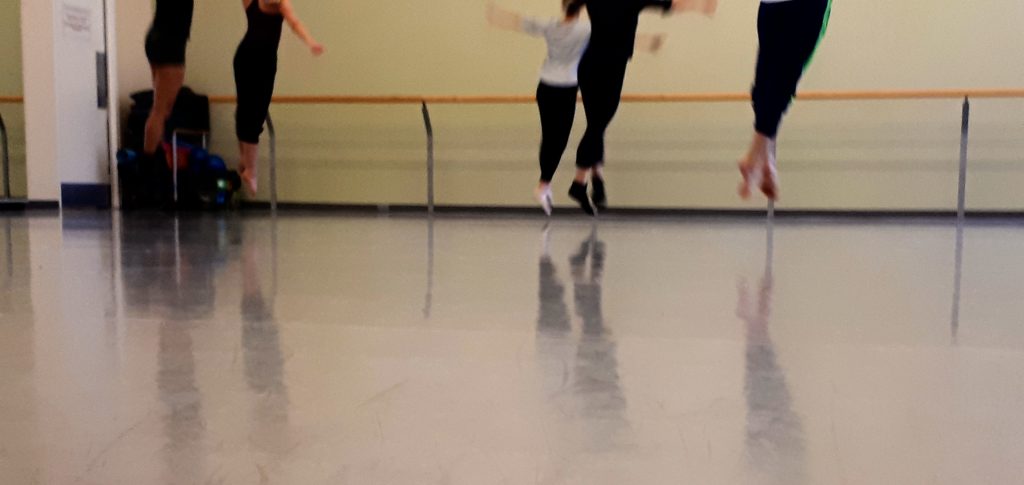
 

Movement Practice (part 9): Can’t Buy Me Practice

The Commoditization of Movement and Exercise

A few chapters ago, I spoke about the wide variety of “movements” within movement practices- Specific philosophies, exercise trends, markets, and sometimes cults, that we tend to identify ourselves with and form communities around. Many of these are healthy, sensory rich, and highly enjoyable ways of interacting with our bodies and others humans, and have been around in some iteration for centuries. I think that finding your movement tribe(s) is great. 

The example I gave earlier was that of the barefoot movement. Not a specific movement form itself, but a paradigm that can be applied to all movement (walking, running, training at the gym without shoes, etc.) that has brought together a passionate community of people who understand the exquisite relationship the foot has with the rest of the body in motion, and shun the shackles of shoes, whenever possible.

Some other examples of tribes and communities are not paradigms, but are specific activities, movement forms, and training styles that exist as subsets of activities. For example, there are those who identify with the classic sports like baseball, football, and hockey, and those are not athletes but who hop on the wagon of training “like pro athletes” of these sports (sometimes questionable in their approach, but an admirable intention all the same). We have the traditional movement forms like martial arts and yoga and all of their subsets (and then the “fitnessized” abominations of them, one of which we will discuss a little further along). And for those seeking regimented exercise, there are more resistance training, gymnastics, and calisthenics programs than you could ever complete in a life-time, each with their own community associated with it.

At their best, these movement forms serve to connect us with our bodies and build communities around movement. They can be healthy and enjoyable to do, enriching our lives. Yet at their very worst, these community forming movements can become consumer trends that perpetuate unhealthy relationships with movement, congregating similarly consumer-minded people together to feed off of each others insecurities, and for big marketing masterminds to prey on. 

The Shared Intention  of Community

The wonder and danger of this community-forming around movement culture is that we, individually, tend to exist as a reflection of those we have the most interactions with. These interactions almost imperceptibly change us over time. Those who we seek the company of to move with will begin to shape how we are in other areas of life. For example, those who use movement practice to heal and change the way they move, and who group together with other healers, will flow into a mutual, health-giving trajectory that challenges their current habitual patterns, behaviourally and physically. This mutual path can exponentially increase the rate of change they may experience. Yet the same can be said of those who seek the company of others to engage in exercise while mired in self-deprecation, self-pity, and compulsive consumerism. Their mutual path, too, will speed their trajectory into more of the same. More insecurity. More fighting with their bodies, using exercise to beat their bodies into submission. More commoditization of movement.

The intention you choose for movement, in fact, is a reflection of your larger intention for how you live your life. Engaging in that movement form with your current life philosophy, or set of values, can set you further along that trajectory, or change it completely. As the mystic, Rumi, said, “The body is not an obstacle on the way of the soul. It’s a tool to be used for that journey”. It is important to be aware of this so that we can choose our movement practices and communities based on shared, healthy, intent. The two intentions I wish to zoom in on are that of consumer of exercise, or explorer of movement.

Exercise Consumer or Movement Explorer?

One of the more prevalent attitudes I see towards movement is that of consumer, which is most often a reflection of an unhealthy relationship with movement (and associated with The Exerciser archetype’s compulsive need to perform exercise as a mechanism to control their lives or make up for “bad” habits). In the consumer mindset, exercise becomes something that is used to end-gain. To numb out a negative emotional state without investigating what that state is, much like the individual who uses “retail therapy” to self-soothe when something feels missing or uncomfortable in their life. 

When you act as a consumer of movement you treat it in the same way the compulsive shopper does. Movement becomes something you buy- An exercise program, a piece of equipment, a personal training session, a yoga class, a massage. You treat it like a thing you can possess and show off. Like buying a new car, you think that your purchase will enhance the quality of your life, solve your problems, and command respect from others, portraying you in the light you wish for that item to identify you as: Someone of affluence and excellent taste, worthy of respect and belonging. But at the end of the day you realize that you have paid more for the car than the value you get from it, and something still feels like its missing. After a few weeks you realize that the admiration people express towards your car doesn’t translate into their admiration of you, just of something you have, nor does having the car in your possession doesn’t change who you are. In fact, from the very people you wished to impress you may sense jealousy or resentment, when you really wanted connection and respect (qualities that cannot be bought or translated into market value for exchange).

In the same vein, you can’t buy exercise and treat it as a commodity, like a car, hoping that it will create an image around who you are for others to admire, or thinking that paying the money- the gym membership, the fashionable gym clothes, the high-end yoga mat- will change anything about your relationship with yourself and solve your problems. You can’t buy into a community when what you’re seeking from it is validation and a desperate grasping to fit in. You can’t buy exercise and treat it like a market commodity, because the value received from the movement experience is not something that can be owned. Its not something that has reciprocal worth, meaning that what you get out of a movement experience isn’t something with a fixable numerical value.

The Exponential Gain on Movement Experiences

While consuming exercise comes with interest you pay off later, exploring movement has the potential to provide exponential return on investment.

An personal example of this goes back to when I was 25 and in a lot of pain daily. I went to see a colleague and friend of mine who is a chiropractor. With him, the market value of a 30 minute session is $80, but the worth of that session was absolutely priceless.

In those 30 minutes I was thoroughly assessed, received acupuncture, and was taught one exercise. The real value of this session came from what I did with next that 30 minute experience. I invested that $80 through the use of my time: I practiced that one exercise every single day for a year. Each day was a new exploration of its depth and breadth, approaching it differently, and curiously finding new dimensions within it. Doing this changed my life. Not only did it make my body feel much better, it opened up a new paradigm of movement for me, introduced me to a new community of movement educators who I now call my mentors, and has completely changed how I work with my clients and run my business. In retrospect, I would have paid much more than $80 for that session (though at the time this was a lot for me).

But this illustrates my point: In movement, the worth and the market value are often not matched, and it is our choice of intention that dictates the magnitude and direction of this discrepancy. I know a lot of people who pay thousands of dollars every year for exercise therapies, treatments, and classes, and gain nothing from them but more space in their bank account. Yet I know that it is possible to invest in a 30 minute experience, and benefit from it exponentially, simply by a shift in mindset from consumer to explorer. From commodity to gift. 

Movement, as discussed in the previous chapter, is more like a gift we are given, or that we make time to give to ourselves. Hopping on trends and buying in to fitness fads devalues movement and treats it like something separate from our regular lives, when in fact, as the Integrator knows, we gain the most from movement when it is a valued part of our moment to moment existence, not compartmentalized into a 60 minute session that we begrudge.

Be(A)ware of Consumer Trends

I’d like to use an example of a trendy fitness class right now that I think illustrates the exercise consumer mindset perfectly: Hip hop spinning. If you haven’t heard of this class, look it up. You may already be aware of the popular chain providing this class, Soul Cycle. Here is a class description I found while “researching” a little more into this trend: “Hip Hop Spin class is a dance party on a bike where you ride to explicit hop hop music and move your arms to the beat of the music”.  From another class description: “Our music selection and spin moves make you forget that you are working out!”. 

I can understand wanting to use music to enhance the ambiance and boost energy for a training session. I use music to this end, but I could also go without it, be in silence, or train listening to a podcast. And as a dancer, I can understand the appeal of dance fitness classes, like Zumba, and have nothing against them per se (not to say you’ll see me in one anytime soon). What boggles my mind about the existence of hip hop spinning is how it seems like someone conjured it up with the explicit intent to distract the participants from the fact that they are performing high intensity exercise. 

There are a few problems with this: 1) The risk of tuning out so much from what the body is feeling that the risk of injury increases (yes you can get injured on a stationary bike, I’ve seen it), 2) The cultivation and encouragement of The Exerciser mindset in which the participant is motivated to exert themselves, feel the burn, and the primary touted benefit is how many “unwanted calories” they are “scorching” (actual wording from another class description), 3) The participant is performing two potentially amazing movement forms poorly, at the same time- Dance and cycling. In my mind, it would be preferable to focus on one or the other, which would take you deeper into the experience of each activity, rather than do both in a sub-par way, taking you out of the enriching experience both have to offer, and focusing only on the “burn”.

What were the creators of hip hop spinning thinking? I would love to give them the benefit of the doubt and believe that they had the participant’s health and well-being in mind, but it is hard for me to do; all I see is a fitness trend being marketed to the easiest market to prey on: Women Exercisers with body image issues, dieters, and those who lack confidence in themselves and their bodies. These are the exact people who will pay money to tune out of their bodies (which they hate) and swoon at the promise to burn as many calories as possible, while listening to Beyonce. Instead, I image the creators asked, “How can we make indoor cycling more trendy and flashy, and lure more people in? Can we convince insecure women that they’re burning more calories by adding dance moves to a spin class? Do the novelty and ‘additional benefits’ justify our increasing the price? Can we make more profit?”

I think it is quite an interesting notion to aim to make money off of people who hate exercise, but it is a market surprisingly easy to exploit. From my observations, hip hop spinning is a class for those who hate exercise, yet know they should do it, and they won’t do it on their own no matter how much money they’ve invested in their home gym set-up. The only thing getting them into a fitness class is if they find one with excessive stimuli and constant guidance from an over-exuberant coach that will distract them from the unpleasantness of exercise, so they can burn calories and fulfill their “health obligation”. Unfortunately, this usually attracts insecure women- The exact group of people who would benefit from a movement form that challenges them to get into their bodies with their full awareness, and become empowered through a practice of skill acquisition or strength development. Something that helps them appreciate what their body can do, not abuse it with stressful exertion (i.e. flail their limbs to the beat of the music while riding a stationary bike).

But the appeal of hip hop spinning is powerful for this group. All you have to pay is $25 to forget for an hour how much you hate moving and being in your body, with a tribe of people who will bask with you in implicit self-deprecation, and the bonus of burning 500 extra calories that will justify their ice-cream binge planned for later that evening. All this, rather than go out for a peaceful bike ride in nature, as the sun sets. Or take an actual hip hop dance class that challenges the mind and body, both as a physical and cognitive skilled practice.

Hip hop spinning is a prime example of exercise being treated as a market commodity. Something to buy. Something to use. Something that costs more to you than it creates for you. Something you purchase, do, and forget about when you’re not doing it. Congregating people together of a similar, unhealthy mindset. This is not how a healthy movement practice should look. This is not the gift cycle revolving around gratitude who’s worth is many times greater than its market value.

But it’s not all bad…

I must admit that there is good to find in these consumer fitness trends (though I personally find repelling and deem unhealthy for long-term consumption) because if these forms of trendy movement succeed in getting someone moving when they otherwise wouldn’t, then it has use. If hip hop spinning and its cousins can serve as an entry point into a healthier lifestyle with more conscious choices about movement and nutrition, then this is something to celebrate.

Everyone starts somewhere, after all. Most of us start our movement path as The Exerciser (I certainly did). The main issue I see with these trendy forms of consumer fitness is just that: They treat the participant like a consumer, and movement as something to be jazzed up to look interesting and nicely packaged to be sold and marketed. This, in my mind, removes us from the part of movement practice that is designed to connect us with our bodies. It removes the possibility of movement practice being a spiritual practice, a tool for the “journey on the way of the soul”, and reduces it to a market exchange, perpetuating an unhealthy relationship with it and ourselves. It removes the gift from the experience of bodies, and if this is already how we live our lives in its other arenas- as consumers, then engaging in exercise as yet another consumer endeavor does nothing to teach us to live differently and learn The Integrator’s values. We simply repeat the same habits and patterns we are used to, staying safely in our comfort zone, no matter the cost it may be having. When it comes to commoditizing exercise, the cost is often higher than the value.

Value vs. Worth

In The Gift, Hyde differentiates between the terms “value” and “worth”. He writes,

“I mean ‘worth’ to refer to those things we prize yet say ‘you can’t put a price on it.’ We derive value, on the other hand, from the comparison of one thing with another.”

The latter term, value, has to do with market value- The exchange of money or goods for something of comparable value. When we put a set price on the experience of movement, we devalue it, for as I’ve said, there is no price that we can truly put on an salubrious experience that connects one with the self and helps one to reach their full potential. To me, this makes the cultivation of the movement practice a form of art, a gift we give to ourselves. Putting a dollar value on it, packaging it, and mass marketing it removes this quality from movement practice and changes our relationship with it, from experience to product. From gift to commodity. From cultivating an internal experience to showing off of an external state.

Feeding into this consumer mindset is the larger struggle we have as a society- That we think we can buy our problems away. We think we can exchange dollar value for a solution to what we perceive to be an issue in our life, yet we haven’t taken the time to accurately assess the problem. We sense a lack and are uncomfortable with it, but not knowing its true source, we aim to fill it with something immediately available in an attempt to buy a sense of peace. As in other areas of life, this lack isn’t something that can be fulfilled by buying something, but only by honest investigation into the source of the sense of lack. Often the root is an incongruence between the values we act by and the goals we are chasing. Hip hop spinning is insufficient to fulfill a void created by a life lacking congruence and only drains you of the energy you could be using to take action on that very incongruence.

Can’t Buy Me Practice

To close this chapter, I’d like to provide a story that I feel  is a perfect depiction of this compulsion to purchase a passively outsourced means of avoidance for the inherent discomfort and challenge of self-investigation.

I recall a client that came in a year or so ago for a Thai massage session with me. From start to finish she had a difficult time relaxing. Her tissues were resistant to releasing, her body was stiff, and she had her eyes open nearly the entire time. Her muscles were firm and dense feeling but it wasn’t the type of tonicity associated with the healthy tone one develops from quality resistance training. It was a hypertonicity suggestive a dominant sympathetic nervous system: The fight or flight aspect of our nervous system that is always on high alert scanning for the next threat, ready to defend itself. I didn’t ask what was going on in her life for her to have gotten to this state. (A stressful work or interpersonal life? An untreated, overlooked traumatic injury or accident? A history of trauma or abuse? The global human struggle to feel worthy of giving and receiving love and belonging? All fair game.) But for her, this semi-tensed up state was as “relaxed” as she could get, relative to her normal, hypertonic self.

I didn’t feel there was anything “wrong” structurally with her body, yet I wanted to let her know what I’d observed, and so, after the massage I mentioned to her that it felt like she had a hard time relaxing and letting her full body weight be supported by the floor; surrendering to the experience. I told her that it felt like her body was holding a lot of sympathetic-tone, and I asked if she had a relaxation practice. She agreed she was very tense and to my question replied, “No I don’t have a relaxation practice and I don’t know what that would look like”. I explained to her that relaxation is a skill that requires practice, it isn’t something people just have (our nervous system is hardwired to scan for threat, not to seek relaxation), but something to cultivate through the deliberate, consistent practice, using portals like meditation, breathing exercises, and restorative movements, and exercising critical self-awareness.

“Oh… That sounds like a lot of work. I wish it wasn’t a skill. Isn’t there something I can just take instead?”

“Morphine. Oxycontin. Valium. Alcohol. Choose your vice.” I joked. I really hope she didn’t take me seriously.

Yet sadly this is the all pervading consumer mindset: I don’t want to do it myself because practice is harder than buying a solution. In the words of Daniel E. Lieberman, author of The Story of The Human Body,

“Even more insidious dangers are those that make your life easier but actually make you weaker”.

Easy, store bought solutions are only band-aids for a larger issue (to boot, the crummy kind of band-aid that comes off as soon as you get it wet).

We can learn to let go of the consumer mindset towards movement practices when we start noticing how the very things we’re told will make us happy to buy are the same things that perpetuate a sense of lack and consumerism. As we drop the exercise-consumer mentality and embody what this means, we also become more conscious of where else in our lives we are succumbing to being marketed to. Where else in our lives do we treat experiences as commodities? 

Movement Practice (part 8): Gratitude in Motion

Gratitude in motion vs. End-Gaining

Our bodies are a gift to behold, and our movement practice is a physical expression of gratitude for this gift. 

Pay attention and you will see how the vast majority people are deprived of both movement and gratitude in their daily lives. By reframing movement and exercise as acts of thanks-giving for our physical structures, we stand to gain so much more than the mere treating of our movement practice as a means to a physical end.

In Alexander technique, there is a term called end-gaining. End-gaining means “the tendency we have to keep our mind and actions focused on an end result whilst losing sight of, and frequently at the expense of, the means-whereby the result is achieved.”

What contradictory advice this can sound like. On one hand, it is important to start with the end in mind, be able to clearly visualize your goal, and keep a laser focus on it. On the other, when stuck only in an end-gaining approach we risk missing the journey from which we can learn so much. We lose the beholding ourselves and our innate gifts in the mire of comparison, judgement, and fitting in.

In a movement practice we risk end-gaining if we take our bodies for granted. In the words of Nietzsche, “All virtues are physiological conditions”. Consider that gratitude is a virtue both cultivated by and requisite for the development of a movement practice and for a fulfilled, happy life. 

In this chapter we’ll be comparing two intentions- the giving and receiving gifts, and the exchange of market commodities, and how these two intentions can be embodied in a movement practice (the latter being a very dangerous mindset to move from). Imagine a spectrum on which one side we have a gift culture, and on the other a capitalist market. A healthy movement practice must err to the gift end of the spectrum, and to understand why, let’s begin to explore what gift giving and gratitude really are.

Our most innate gift

The book The Gift, by Lewis Hyde is one of the best books I have read on the subject of gratitude and gift giving without explicitly telling us, the reader, that you must be more grateful.  Never-the-less, you finish the book inspired to give more.

Hyde accomplishes this by providing a rich history of gift giving, dating back to the traditional gift culture of ancient tribes, through to the modern day advent of interest on loans and capitalism. Just in this retelling of gift history we are reminded of the importance of giving without expectation to receive in return, and the importance of gift culture. His book is written primarily for artists (poets being his intended audience) and goes deep into theme of struggle artists often face in finding a middle ground that will allow them to live off their art in a capitalist society while staying true to their artistic vision.

Hyde’s book was written for poets and artists, but as I was reading all I could think of was, “oh my God he’s talking about movement”. 

A gift from “the void”

Hyde writes that for the artist, the source of their creativity feels like a gift they receive. This “gift of creativity” is a sudden inspirational glimpse that seems to come out of no-where without them asking for it, from a mysterious void somewhere within them. The artist cannot say where it comes from, but that after receiving this gift and their creative labour is through, the artist experiences a deep sense of gratitude to the unknown source of their creative impetus.

Between the time the artist receives this gift and their labour’s completion, the artist is fueled by a feeling of indebtedness for this innate gift, and the only way to relieve this tension, this indebtedness to the initial moment of mysterious inspiration, is to labour until that feeling can be let go, until they feel they have become equal to the original gift-The inspiration, the teaching, the moment of illumination that came without their asking. 

Hyde further explains that in it’s purest, traditional sense, a true gift cannot be held onto, but must be used by the receiver. Thus, to become “equal to the gift”, the gift must be used, or else it is wasted. This is different than reciprocity in gift giving in which we give directly back to the gifter (which can often feel like an obligation, especially around Christmas and other material gifting holidays, which negates the true meaning of giving a gift).

A true gift cannot be hoarded or held onto, nor can it be given with the expectation of receiving anything in exchange from the giver, otherwise it no longer can be called a gift, but a commodity. The true act of gratitude we can show for the gift, therefore, is by using it, passing it along, or becoming equal to its spirit. To rise to the level of the original gift and meet our own potential in it, then let it go. The act of labour by which the artist uses up their creative gift and lets it go into the world is the transformation of the feeling of indebtedness to gratitude.

Gratitude results from the creative process, and so, art cannot exist if not for gratitude. I believe the same is true for our bodies, and Hyde’s book serves as a lovely metaphor- Our bodies are a gift with which we must labour in gratitude. Do you see your own body as a gift? How many of us rise to the level of our bodies? Awaken to its full potential? Imagine the gratitude you could cultivate simply by moving your body. And imagine living with the constant tension of indebtedness if you do not try to become equal to your most innate gift. 

As a side note it saddens me to see society viewing creative and movement programs as unimportant, and cut from public school curricula. If art and movement are unimportant, then so is gratitude, and therein lies many problems with our society.

The Mentor’s intellectual gift

To further illustrate this idea of “rising to the level of the gift” and the labour of gratitude that I feel is necessary in a movement practice, let’s apply this to an example from the intellectual realm, a space in which I feel more of us are used to thinking in than the kinesthetic sensing space (that I personally find so much more natural to communicate in. Words are hard.)

For this example, use whichever intellectual or creative field you currently find yourself occupying or care about: Interior design, software design, physics, whatever your thing is.

You may have, at some point, received a teaching from a mentor in your field to which no fee was attached. If you are a humble individual, then you probably felt that you did not do anything to deserve such kindness and feel indebted to your mentor, even though they expected nothing in return. Rather, they seem to delight in sharing their wisdom with you (this is what makes it a gift). Still, you are very likely to feel at least a little discomfort, a low level, ever-present tension in this receiving without reciprocal giving (unless you’re a complete sociopath). To quell this tension, this sense of indebtedness, you feel compelled to use it: You find that the tension becomes less of a negative discomfort, and more an attractive pull to do your best work, to rise to meet the level of your mentor’s gift. You use their teachings (their gift to you) to your fullest. Perhaps the gift is working in you at a level just beneath your conscious awareness, but you find yourself aiming to fulfill and embody your mentor’s teachings, and striving to reach your potential through them.

Eventually, after months, years, or decades (one can never know how long the labour will take) you feel you have reached the level of the original gift and you are drawn to share it with others, which serves as a way of paying the gift forward to honour your mentor. This using of the gift is the only true way to express gratitude for your mentor, for gifts are not meant to be received then hoarded and left untouched. In fulfilling this process you come to realize that your mentor was fulfilling his own gift cycle when he passed along his wisdom to you initially. He didn’t need anything from you but for you to use his teachings and pass them along when the time came.

This gift-cycle attitude is an attribute that I see in nearly all healthy movement practices: They behold the body as if it were a gift we have been given without expectation of paying anything back for it, yet unless we use this gift, we will live in our bodies with a sense of indebtedness and discomfort that comes only with the treating of it as a commodity. In our bodies, this tension from indebtedness takes form as the feeling that something is missing in our lives, easily mistaken as something that we need to buy. But we already have what we need within ourselves, its just that we have not risen to meet it and fully explored our potential. This exploration is something that cannot be bought. 

A market commodity, on the other hand, is something we can buy, own, and keep. A gift is something we have received and must use, and in the use of it we increase it’s worth. Our worth to ourselves and to the world can only increase through the use of our gift. 

Movement practice as a labour of gratitude

Let’s now turn this gift metaphor towards the concept of movement practice.

A movement practice is a transformative labour of gratitude for the body which we express by fully embodying it, striving to explore it and meet its potential.

Hyde speaks of gratitude,

“as a labour undertaken by the soul to effect the transformation after a gift has been received.”

In this case, the gift is our body, received at our time of birth.

He continues,

“between the time a gift comes to us and the time we pass it along, we suffer gratitude. It is only when the gift has worked in us, only when we have come up to its level, as it were, that we can give it away again. Passing the gift along is the act of gratitude that finishes the labour.” 

In our case of movement practice, the gift “working in us” is the fine tuning of homeostasis our bodies do without our conscious intent as we tune in to our bodies and move them in healthy ways. In allowing ourselves not to be manipulated by what society tells us is best for our bodies, but honouring them in a way that is fulfilling, enjoyable, and healthy for us, our gift- our bodies, work for us with efficiency and ease. This is a labour that is never finished. 

Passing the gift along in its simplest form, is to share this way of being with others by living with gratitude, being a living testimonial to our innate gift. This allows our very presence to be a gift of sorts: Everyone we interact with can bear witness to a living example of how to engage with their own “soul’s labour” of gratitude for the gift that is their physical body. We  can also pass along the gift by choosing to explicitly share and teach the spirit of what we have learned about the labour of gratitude for our bodies. And here is where we suffer the same struggle as the poet or artist: How to pass along the gift, make a decent living, and stay true to our values? (You’ll have to read Hyde’s book).

Can’t buy me practice

In our society (and I speak primarily of North America, where I’ve lived all my life) I’ve observed that we treat movement and exercise more as commodities than practices of gratitude and rising to one’s potential through exploration. These two modes of interacting with our bodies- gift versus commodity, are incompatible for a healthy movement practice.

Our most innate gift- The simple fact that we have a body, is too often taken for granted. Exercise is sold and marketed to us, telling us we need more of it, yet we are starved for the kind movement that permeates our moment to moment lives. We fail to use our gift and so nothing can be passed along. And because of this we lose the transformative power that the practice of gratitude for our bodies has for us in helping us lead happy, healthy, meaningful lives, for ourselves and future generations. 

Having looked closely at movement practice as a transformative labour of gratitude for the body, in the next chapter we will look at the many ways this is lost. How exercise is marketed and sold to us as a commodity, leading to unhealthy relationships with our bodies, and reaps its negative effects across other areas of our lives.

Movement Practice (part 7): Movements Within Movement

What is movement practice?

Up until now we have been discussing peoples’ common attitudes towards movement and exercise through the use of archetypes and by clarifying some commonly used (or dare I say, misused) terms pertaining to movement practice. I’d like now to switch gears slightly to take a closer look at what I mean conceptually by movement practice, and then further along in this work, why it is important to investigate the form yours takes and your relationship with it.

Double-edged sword

We live in an interesting time in which the sharing and ingesting of information is ludicrously easy, probably to the point which it is making us less good learners (a topic for another sort of essay). With this ease of sharing of information- both of the practical and educational variety, but sometimes also the useless and intimate details of the personal lives of our distant acquaintances and what they had for #healthydinner last night- people are more health conscious than ever. In the time it takes to type in a sentence into Google, or your credit card number to Amazon Prime, you can have access to a plethora of websites, books, and other resources teaching how to be healthier. This heightened health-consciousness, however, comes with a double edge. On the one side, we have an increase in awareness of the benefits of making more time for movement and exercise in our lives. On the other side there risksbeing too much information, misinformation, and the lure to compare ourselves to the others.

As one of my favourite ballet teachers said countless times, “where your attention goes, energy flows”.  For those of us who want to include more movement in our lives as part of a healthy lifestyle plan, this abundance of information makes this both an amazing, and yet confusing and challenging time in which we must choose where we want to focus our attention, and discipline ourselves to have a healthy, pragmatic relationship with the information we ingest (and this includes the words I write, too). 

This idea of sifting through the rubbish, separating the wheat from the chaff, seems like as good a place as any to start to conceptualize a movement practice. Let’s bring our attention now to the mass of information that tells us what we should do, what is best for us, while remembering that “they” can’t possibly know what is best for you. I certainly don’t. “The others” don’t. It’s only you who can know, and don’t you know it already how difficult it is to interpret the information coming from your own body, let alone trust someone else to do it for you. 

Movements and markets within movement

As I’ve mentioned, there is an abundance of information and a surging awareness of the world of health and fitness. Inspiration to move (or, more colloquially, “fit-spiration”, another double-edged sword, which I feel, more often than not, serves to activate our body-image based shame-triggers than provide actual inspiration) exists just a click away. New vocabularies are developing around movement culture and people are latching onto identifiers for their movement and exercise philosophies. We are seeing the advent of “movements” in peoples’ movement practices.

A movement “movement” is seen by us as a new paradigm for organizing how we perform movements and exercise. A system with its own sense of purpose, ideals, and goals. People are drawn to these movements because something about the look and feel of it seems to resonate with them. There is a perceived congruence in the underlying beliefs and goals that both the individual and the movement hold. Often, identifying with a movement (both in movement practices and in other areas of life, such as the intellectual, political, or spiritual) can bring a great sense of meaning and purpose, helping to create a sustainability effect that is necessary for a life-long, pleasurable relationship with the movement practice. If you hate it and don’t find fulfillment in your movement practice, you won’t stick with it long enough to reap its benefits, which is why “enjoyable” is one of the three tenets of a movement practice that I keep repeating (the other two being fulfilling and healthy). 

Sometimes this relationship with a movement is not so healthy. Some movements can be cultish. Some movements are well-intentioned but poorly led, leading to misinformation and injury (Cross-Fit often gets flack for this). Sometimes there are movement wars and clashes, debating which one is better than the other: Marathon running vs high-intensity -interval training; powerlifting vs weightlifting (and you’ll find some nasty, useless, and time-wasting exchanges in online forums, of which I personally have no interest in engaging with). Sometimes we’re drawn to movements for the wrong reasons, like that we’re physically attracted to one of its founding leaders, and confuse this for a congruence with our goals. Latching ignorantly onto a movement is another double edged sword of the movement practice exploration.

There is also the irresistible lure to the new and shiny. Ironically, while the advent of a “new” movement can seem like a groundbreaking, sophisticated, or “high-tech” (our interpretation: better) way of interacting with our bodies, many of these movements are only building upon or repackaging something intrinsic to us that already exists, and has always existed, but just that we forgot was there and needed to create a new way of experiencing it again. Some are more or less sensible than others, more or less in line with your individual goals than others, but what all these movements within movement have in common is something atavistic. Something sacred and primal.

As I see it, this is the need to connect with our bodies, use them in the various ways made possible to us by virtue of the miracle of our skeletal structure. Its to delight in the receiving of the inputs of the world around us through the sensory and motor receptors in our joints, and the skin on the soles of our feet and hands (and other body parts should we choose to accept the challenge to get down on the ground and roll around). And of utmost importance, a movement gives us the chance to be a part of a community of similarly minded individuals with whom we feel safe and accepted by. I say this is of utmost importance because the very part of our central nervous system that allows us to have safe, enjoyable social engagement (feelings of love and belonging) is the same aspect of it that also mediates the immune system, digestion, the heart, the respiratory system, our hearing, and everything else related to our systems’ homeostasis, health, growth, and restoration (parasympathetic nervous system function).

A good example of one such movement that has become well-known to the general public in the past decade is the barefoot movement, including the advent of those goofy looking Five Finger shoes (of which I admit I had a pair back in 2013), and barefoot running (which opens up a whole can of worms in the running world, asking the question, “which running technique is best? Forefoot or heel strike?”. And the answer is, in short, it depends. But for the long answer, I implore you to read the book Even With Your Shoes On, by the running coach and fellow Anatomy in Motion practitioner, Helen Hall). But to call the barefoot movement a “new” movement is not accurate. Before we had shoes all the human race knew was barefoot living. I can only theorize that some ancient part of us recognizes the value in feeling the sensitive skin on the bottoms of our feet interacting with the grass and dirt, in allowing the bones and muscles of the foot to adapt to the naturally soft ground with variable terrain and textures. It is unfortunate that, for city dwellers like me, the only readily available option is the hard, linear concrete walkways which are not so kind for barefoot walking.

What is good about the barefoot movement is that it is a reminder of how healthy it is for us to go out into the woods and be on natural terrain: It holds the ability to connect us both with ourselves and with nature, two things crucial for our health. What is not so good is how people misinterpret “barefoot good” as “barefoot everything, even stuff I’ve never done before but will now start to do for the first time with no shoes, is the best, and running barefoot on the concrete builds character even though it really hurts, but I have to do it because some guy online wrote about how great it was.”

In both movement and the human structure, there is nothing new, just depth and breadth to explore, and the addition of scientific evidence intellectualizing of the human experience of movement, which may or may not even be necessary for us to get out of it what we need: Health, fulfillment, enjoyment, and human connection (with ourselves and others).

The commoditization movement

While there are countless examples of movements like the barefoot movement, aiming to reconnect us with something primal and intrinsic to us that we’ve forgotten was important, there is a shadow side that I do not see at all as a healthy revival of primal movement culture. This is the ever burgeoning trendy, niche, consumer fitness classes, which are primarily marketed towards women (for whom the research shows are particularly susceptible to feeling shame around their physical appearance, making them more likely to buy into such marketing).

Stay tuned…

In the next installment of this Movement Practice monster-essay I’d like to further discuss the perils of commoditizing and marketing of movement we see today, and the consumer mentality that can cause the unaware to treat movement as an item to buy and own to show off, fit in, or as a band-aid solution to deeper, unexamined problems, rather than as a gift we already possess, waiting for us to unwrap.